

Pinterest Best Practices to Get More Traffic & Sales
Pinterest has changed a lot in the years that it has been a marketing platform. In today’s blog post, we will go through the seven things that I think you should either stop or continue doing or do differently this year to continue to grow. This year I am embracing what I like to minimum Pinterest best practices.
Realistic expectations before implementing Pinterest best practices
Before we dive into the Pinterest best practices, there are some myths I want to clear up so you have a realistic picture of this platform. A lot of people start on Pinterest, and they hear all these crazy things like people getting hundreds of thousands of page views. I have clients that are getting 17 million+ monthly views. I have personally sent over 10 million page views to one of my clients’ accounts in three years. You hear these crazy things you may wonder: Well, is that still possible for me?
It’s really NOT possible, unless:
- You have a very established brand
- You have a killer product or content that you sell or give away for free
- It is hyper trending on Pinterest right now
You need to focus more on a minimum viable set of practices and ignore all the big hype numbers you may see.
RELATED: Pinterest Myths That Are Keeping You Stuck
Minimum Pinterest best practices to implement
So that is where the minimum viable Pinterest strategy comes in. You need to create a minimum of one standard pin per week to build a foundation and to begin building traffic from Pinterest. But if you want to see growth you should be pinning 3-5 times per day.
Gone are the days of creating a pin and it going crazy viral. You may see those videos on YouTube promising you viral pins if you use trends, keywords, or videos from TikTok but most of that is just garbage.
So, if you want to have that minimum viable Pinterest strategy this year, it’s time to dive into the best practices.
- Less repinning and more spacing out
- Creating video pins
- Repurpose with a purpose
- Profile and boards all optimized
- Cover photo for your profile
- Using board covers
- Not using other people’s content
Let’s cover each of these in more depth and how to best implement all of these.
RELATED: The Ultimate Pinterest Traffic Strategy for Bloggers & E-Commerce Shops
Less repinning and more spacing apart
Less repinning, if any at all. Gone are the days when repinning your own content on a regular rotation was beneficial. Not anymore. You don’t need to interval pin your pins for them to be found. It’s not that you can’t, there’s just a better way to approach it. I teach in my Academy community that you can still do that, but in a certain way. So if you need more strategy or want to go into that, you can join the academy and learn all about it.
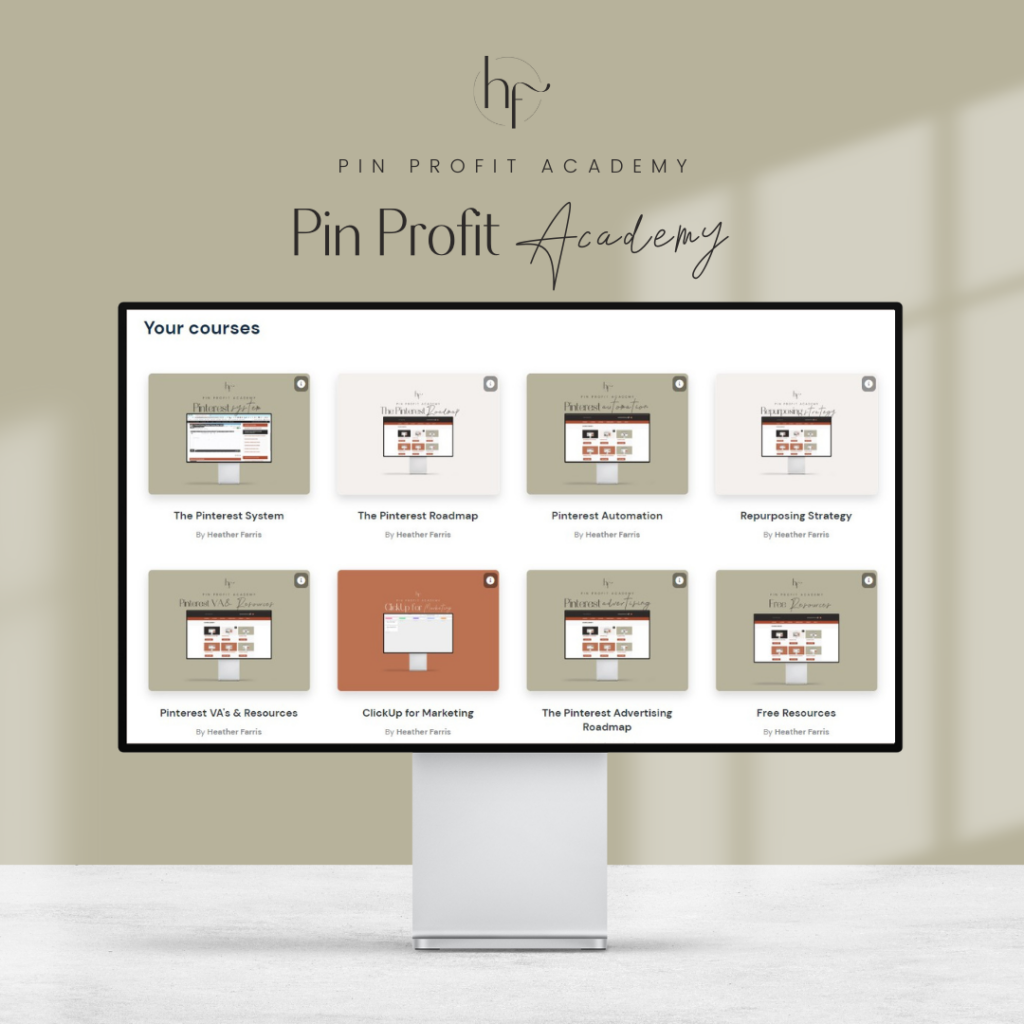
Pin Profit Academy
Marketing can be difficult and trying to figure it out on your own, especially with Pinterest, can be overwhelming.
I will show you how to double your traffic and sales without spending another minute on social media!
PPA is the only comprehensive membership program & community for creating, marketing & selling your products & services using Pinterest.
If you’re going to repin, you’re going to space those pins further apart and you’re likely to see the same or possibly diminished reach on those repins. It’s better to create a new pin image if you’d like to use the same URL that’s previously been pinned.
RELATED: How Often Can You Pin the Same URL to Pinterest Without Being Spammy?
Create more video pins
Even if you are in e-commerce or are a content creator, you really should be creating video pins because they are great for getting more engagement and reach. For minimum daily standard pins, create at least one video pin.
Idea pins have long gone away, but video pins are here to stay. In fact, they are an excellent tool for building engagement and audience growth on the platform, especially if paired well with Pinterest Trends.
RELATED: Pinterest Trends: How to Use This Keyword Tool for Content Planning
You need to repurpose with purpose
Next thing, if you’re going to repurpose, you have to repurpose with purpose. No more just downloading your ted talks and sticking them over on Pinterest, and no more downloading your reels and just sticking them over there. This is not what we want on this platform.
The end goal and the way a pin appears, like from your Instagram posts or Tiktok videos, needs to be adjusted when you repurpose them to a Pinterest pin. Understanding your customer’s journey as part of your audience is crucial so you’re not just slapping up nonsense.
Related: How to Optimize Your Instagram Content for Pinterest
Your profile and boards should be fully optimized
This is not a new one, but it is still and will always be a Pinterest best practice. You should have a fully optimized profile. This is not an option, it is a must.
If you are trying to find clients on Instagram or TikTok, you have to create a profile there. Similarly, you have to have a fully optimized profile on Pinterest if you want to find clients here. However with Pinterest, it works more like Google and runs on its own level of SEO that requires keywords.
If you need to learn how to do that, you should definitely join the academy, and we will help you figure that out. It includes:
- Usage of keywords (do not do that in an inhumane way, do it with tact)
- Optimize your boards
- Optimize your pins
- Optimize your display name
- Claiming your domain
Boards and their keyword importance has increased over the years, so make sure you’re utilizing and optimizing them as well.
RELATED: 6 Places to Use Keywords to Optimize Your Pinterest Profile
Add a cover photo to your profile
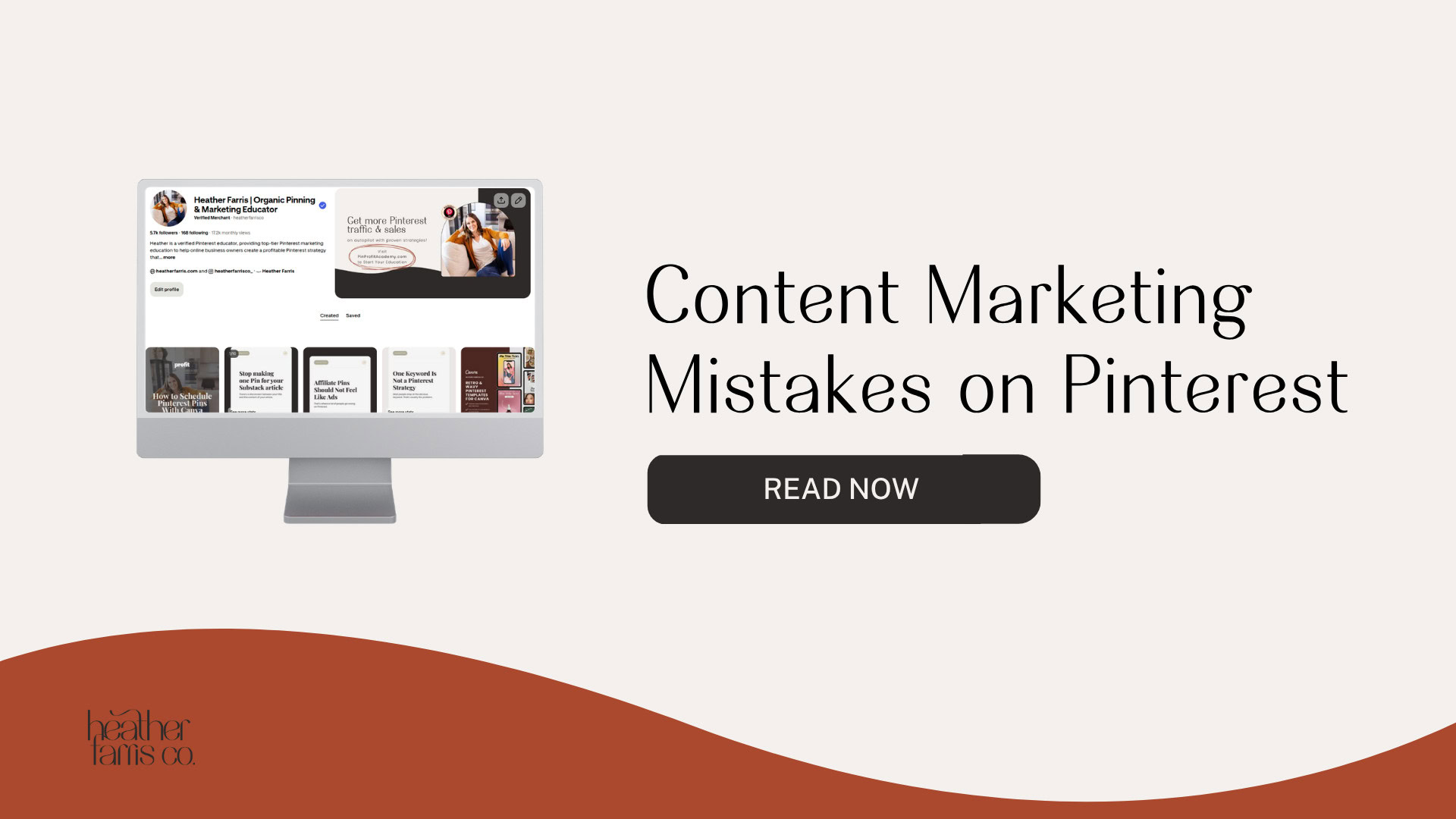
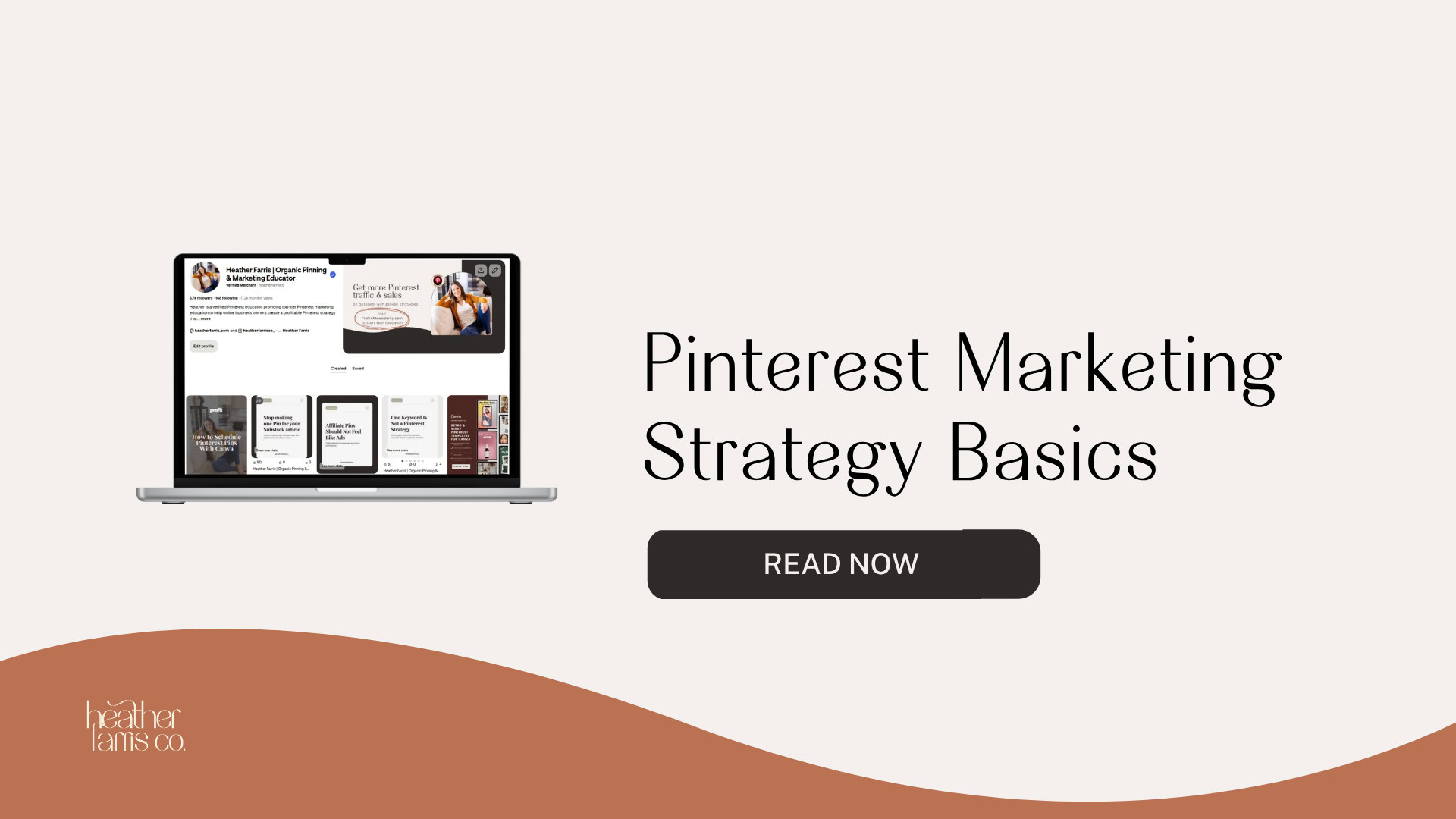
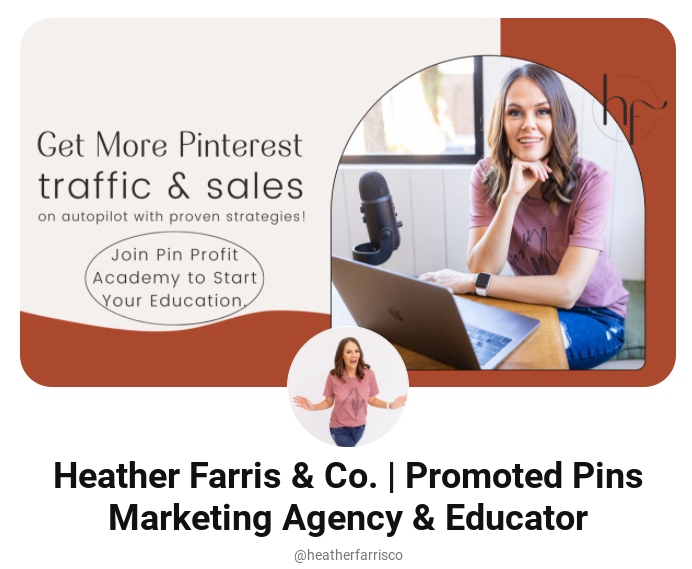
This one is a new best practice, and I’m super excited about it. It involves adding a banner to the top of your Pinterest profile. It’s great real estate, just like a billboard with all your own information on your profile. You can upload a video there or upload a standard static image there.
I would definitely make sure to upload a fully optimized banner to that area. If you see mine below, you will notice that I have an image of myself and a singular call to action because I want people to take action on when they see my profile.
Using board covers strategically
This one is definitely often ignored. I used to say that this was an utter waste of time in years past, but a fully optimized profile includes board covers. It’s more real estate that adds to your optimization.
When you add your board covers, you can either do a tall pin (2×3) or a square one (1X1), but a square one just centers automatically with less tweaking. Make sure you fully optimize that board cover with keyword research too because I have seen traffic to my website and my clients’ websites from those board covers.
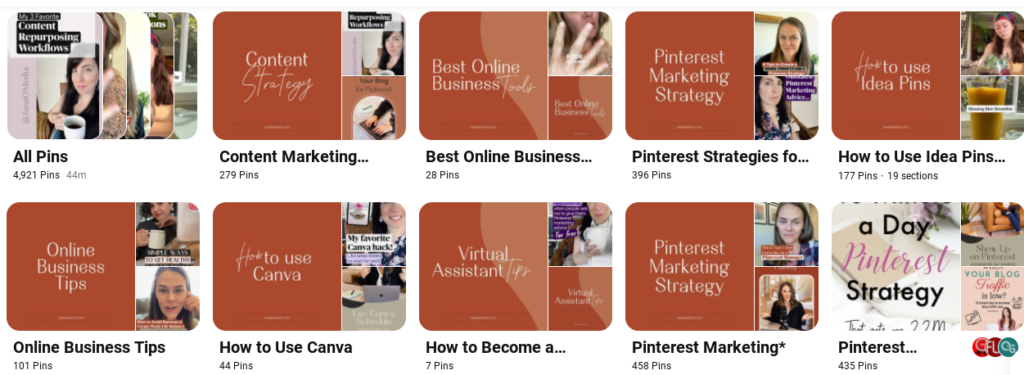
So don’t just throw your board cover pin up there with no link, or it will be dead on the platform. Make sure you optimize the pin and then assign it to your board.
RELATED: The Ultimate Guide to Create Your Pinterest Board Strategy

Pinterest Board Cover Templates for Canva
Designed for digital creators, e-commerce sellers, and Pinterest managers, these fully editable templates help you build a branded Pinterest experience in minutes—no design skills required.
Whether you’re launching your account or giving it a polished refresh, these board covers will help you get organized and make your content easier to browse and save.
You don’t need to repin other people’s content
Last thing, it is no longer a best practice to repin other people’s content anymore. There is still a ton of outdated stuff out there on this. A ton of outdated suggestions like…. You should pin 80% of your content and 20% of someone else’s content. Those were always made up and were never actually based on real data.
Pinterest doesn’t care if you repin other people’s content. They just care that you are creating really quality content with a purpose that is helping their pinners (your audience on Pinterest) to achieve “do, buy or try.” They care that you are providing the pinners with inspiration that they’re seeking, that life change, or that life moment.
They want to ensure that you’re doing that versus just spamming their platform with pins. So it’s no longer a best practice for you to repin other people’s content. This is why many Tailwind communities, formerly known as Tribes, aren’t as effective anymore. There’s no harm, but no benefit either.
RELATED: How to Use Tailwind for Pinterest & Automate Your Pins in One Hour Per Week (OR LESS)
Final notes on Pinterest best practices
In today’s post, we covered how Pinterest best practices come from setting realistic expectations, forget the old “do this and go viral” hype, and focus on consistent, purposeful creation. Keep your Pinterest house in order with:
- Minimum viable pinning strategy (one new pin weekly, 3–5 pins/day for growth)
- Less repinning and more spacing apart
- Creating more video pins
- Repurpose with purpose
- Fully optimized profile and boards
- Adding a cover photo (banner) to your profile
- Use board covers strategically (optimize with keywords and links)
- Not repinning other people’s content
Ready to turn these best practices into a repeatable system that grows your traffic? Join the Pin Profit Academy as your next step for taking your small business to the next level with Pinterest marketing strageties.
Pin it for later


Heather Farris went to school for accounting and worked for years in banking and finance. After finding all of that entirely too boring she started her first blog in her basement in August of 2016. She has started 3 blogs in the marketing, motherhood and travel niches and used Pinterest to grow them all. She quickly became the go-to Pinterest strategist in her peer circles and has been implementing strategies, driving traffic and sales through organic and paid tactics for her clients. On this blog and her YouTube channel, as a renowned Pinterest marketing expert, she educates the public about clear and transparent marketing strategies to help them to grow on Pinterest and in other places online. She created Pin Profit Academy and helps small business owners just like you to master their Pinterest marketing strategy. Heather is now a Pinterest Educator, one of the very few sponsored by Pinterest.