

Pinterest Marketing Strategy Basics to Succeed
Do you have a Pinterest marketing strategy? Have you been slapping pins in your Tailwind queue and hoping that your blog traffic, sales and email list will grow? Then nothing happens month after month of filling your queue…
Well I’m sorry to have to be the bearer of bad news, but growing your online presence, email list and even sales, is going to take a whole lot more work. Let’s cover the Pinterest marketing strategy basics that are necessary for you to succeed.
Pinterest Marketing Strategy 101
A great Pinterest marketing strategy is not just filling a queue of pins, it requires a strong foundation of optimized processes. And they’re very basic things that anyone can do to succeed on this platform.
Getting started on a platform like Pinterest, which is SEO driven, can feel daunting. But let me give you a little comfort in knowing it’s not as hard as it seems. We’ll cover the necessary basics:
- Pinterest SEO
- An optimized Pinterest profile
- Keyword research
- Content planning
- Writing pin titles and descriptions
- Creating and scheduling your Pinterest images
- Running and utilizing your Pinterest analytics
Once you understand the reasons why these are important, then you can start to dig deeper. So let’s get started.
RELATED: The Complete Pinterest Marketing Strategy I Tell My Friends in 2026
Pinterest SEO
Pinterest is a search engine, not social media. So, like Google, it runs off of keywords to serve up the pins that match what you’re looking for. But it is different than Google SEO.
You need keyword research from Pinterest, not Google or hashtags elsewhere. When it comes to a solid strategy you need solid keywords to optimize everything. Keywords are not an option. We’ll get into them more in a minute. But just be aware, the rules are different here, but not difficult.
RELATED: Pinterest SEO Strategies: Ultimate Guide to Boost Traffic
Setting Up an Optimized Profile
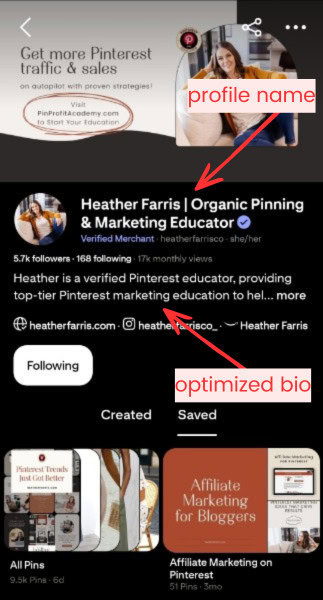
Step number one for your Pinterest marketing strategy is setting up an optimized profile. Now you might be wondering what the heck is an optimized profile. It’s more than just making it look nice, it’s got SEO ingrained in it as well.
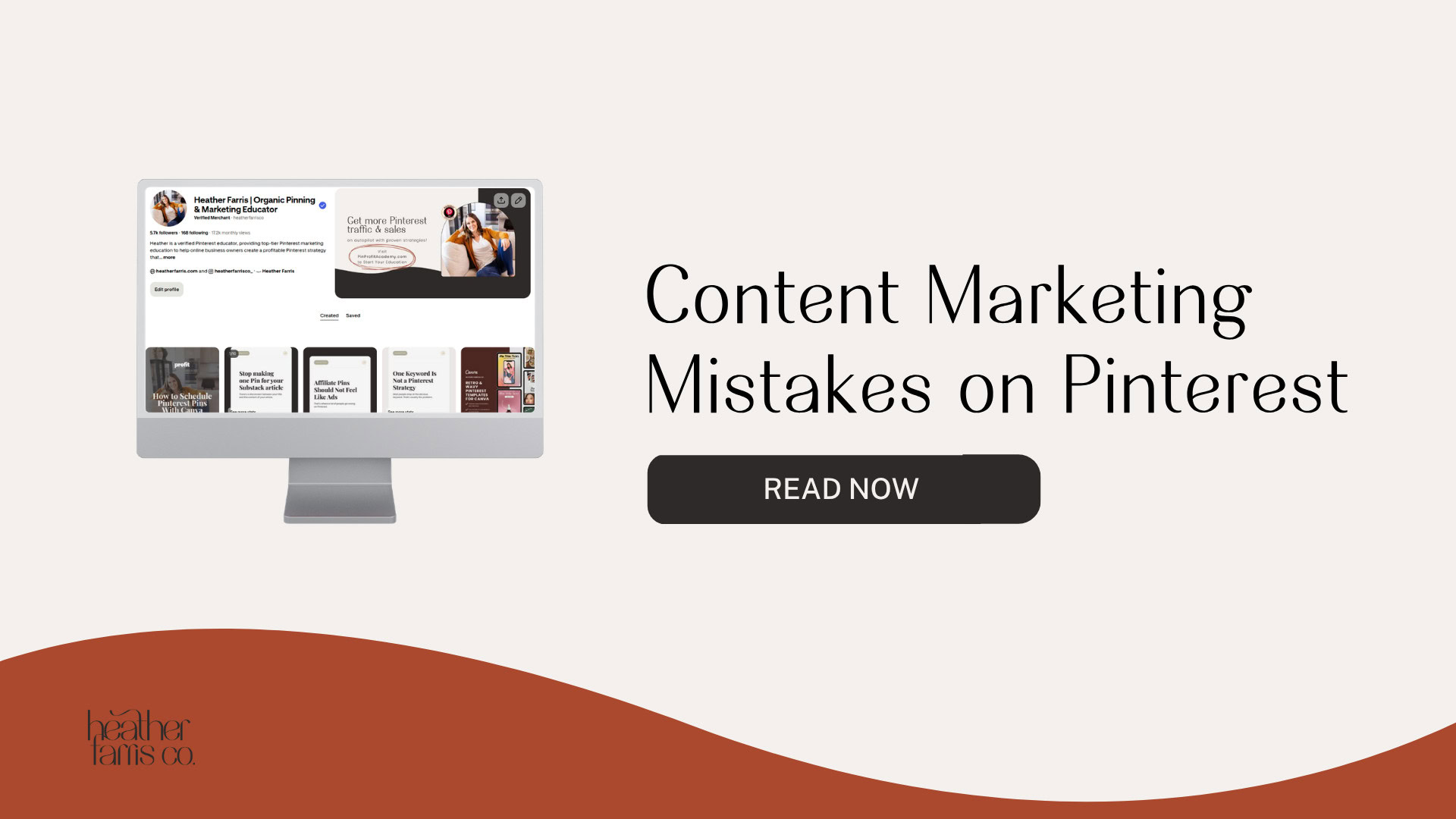
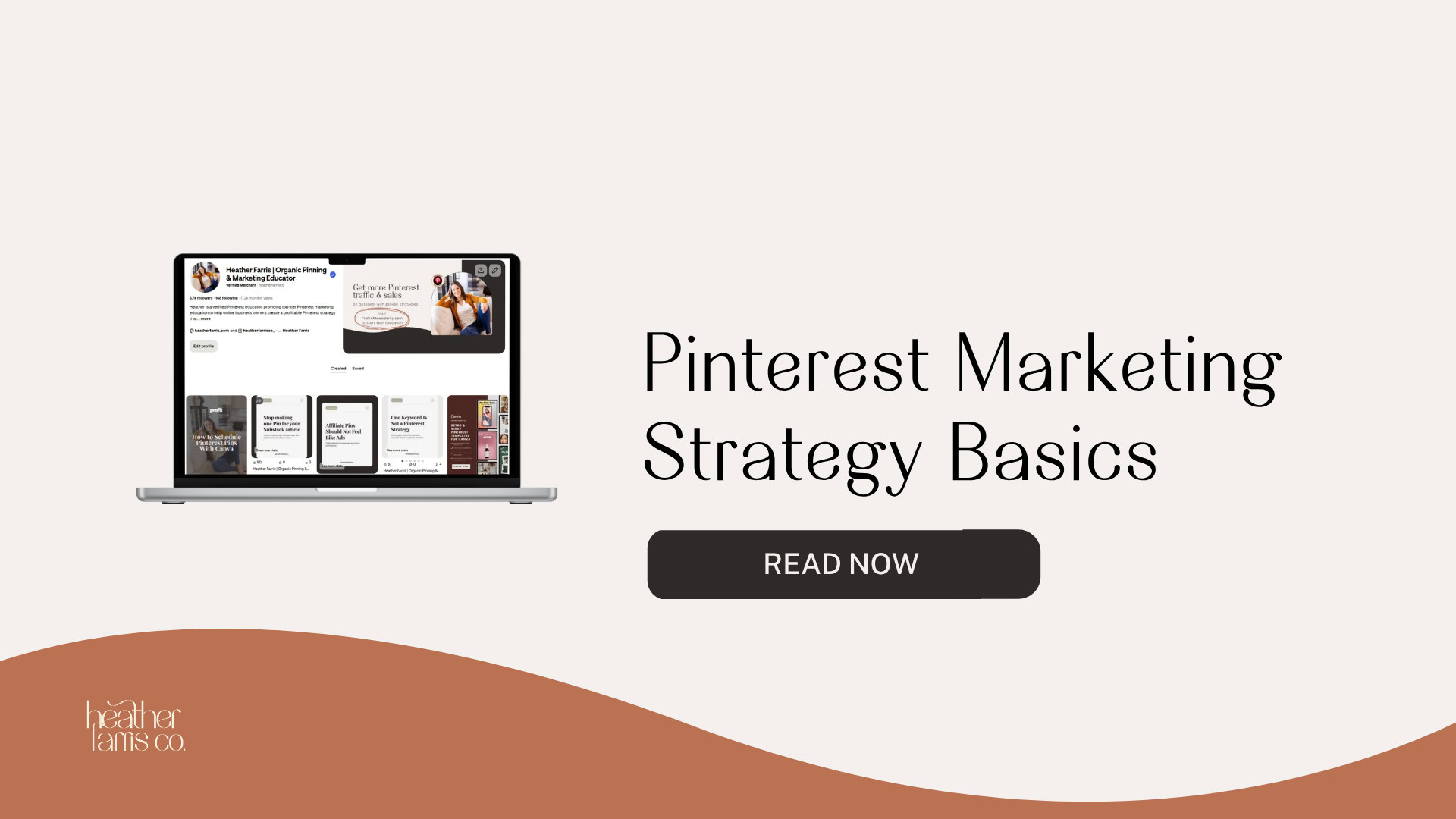
You have to have a really nice display name, and your bio filled out on your profile. Having your primary keywords for your audience based on your business niche needs to be in there. You can see mine below.
Next is that an optimized profile also has optimized boards. Your boards are where your pins live, your structural organization to all your content. And that needs to be optimized in order to attract your ideal audience as well. Without this, Pinterest cannot properly categorize and serve up your pins.
Your boards must have keyworded titles and thorough optimized descriptions too. This is the most common overlooked issue with Pinterest marketing strategy.
RELATED: The Ultimate Guide to Create Your Pinterest Board Strategy
Keyword Research
Keyword optimization isn’t just throwing up phrases you think will work for your Pinterest marketing strategy. If you haven’t done the keyword research, you obviously can’t have an optimized profile. And this is different from Google, because Pinterest’s SEO and algorithm are different, so don’t just apply your Google keywords alone.
Now, how to do keyword research? The four ways I do the research on this platform are:
- Using the Pinterest search bar, and also looking at the suggested searches just below the bar in the feed.
- Inside of the Campaign Manager when building a promoted pin ad. You don’t have to finish building the ad and can still explore the keywords.
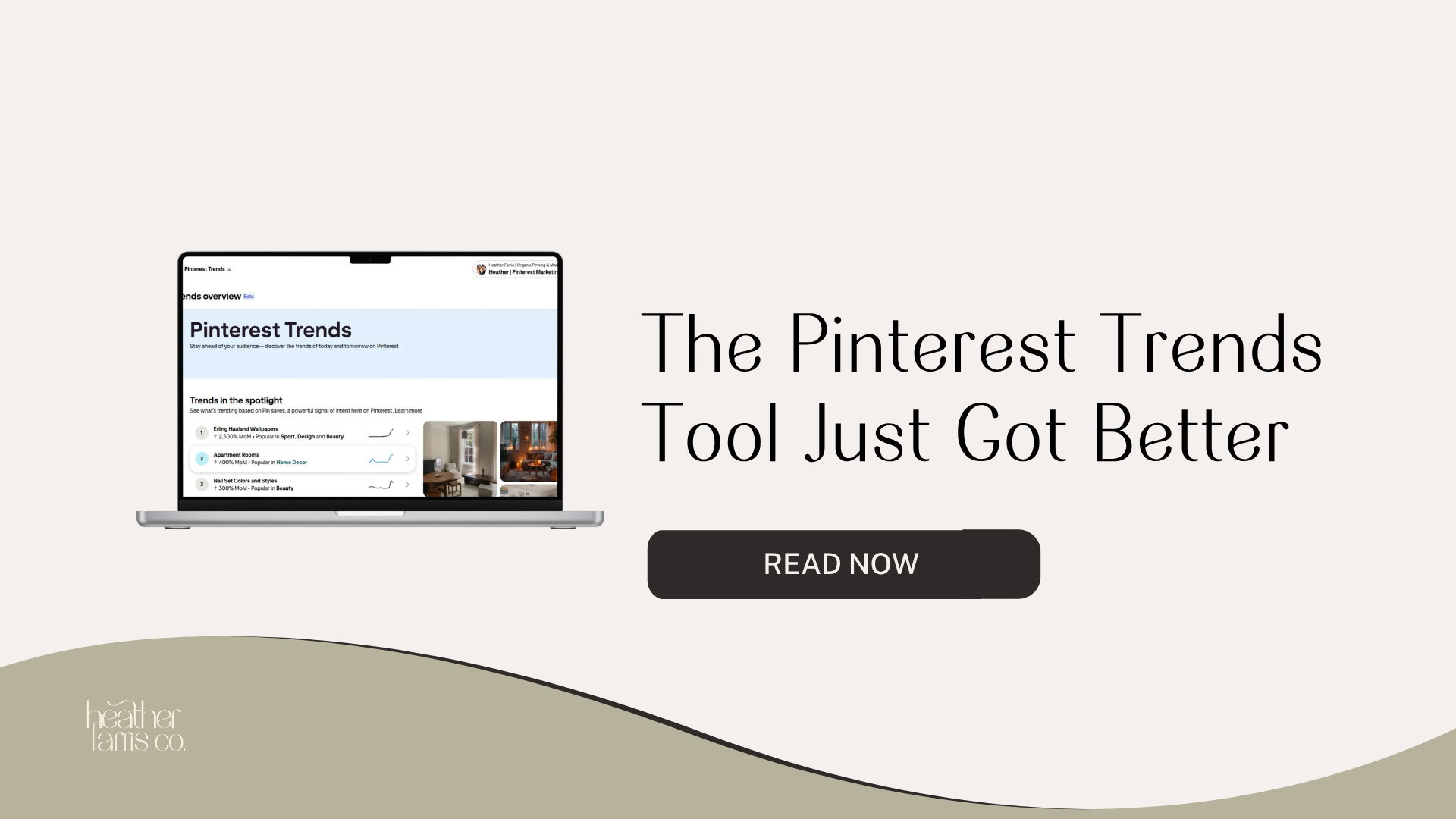
- With Pinterest Trends, you can not only see what’s up and coming with seasonal moments across niches, but also search your topics and see what keywords trends strongly and when.
- Downloading all of your analytics and Audience Insights will tell you what content is working well, and with that, the keywords you’re ranking for (intended or not).
You’re going to use your keywords in all the places. But remember to also update your research regularly, at least quarterly. Trends shift, content ideas wax and wane, and new interests emerge, and your analytics aren’t the same everyday.
RELATED: Pinterest SEO Mistakes Hiding on Your Website
3. Content Planning for Pinterest
Pinterest users are inherently planners, then become buyers. They are planning for things to happen in their lives, sometimes up to a year in advance, depending on that thing, like weddings or babies. But they are also planning other events like Christmas and Fourth of July, or Easter.
Whatever those are, they’re upwards of at least 90 days in advance. So really making sure that you’re doing your content planning for Pinterest, and publishing content in advance of the event you are targeting. You cannot get in the feed during a peak, it must be long before.
Or with your evergreen content from your blog or shop, you’re prioritizing your promotions or announcements. Then also pinning your best performing content regularly too. But the key in your content planning is that you have a plan you actually follow, and knowing why you’re pinning what.
RELATED: The Pinterest Trends Tool Just Got Better
4. Writing Pin Titles and Descriptions
Step number four is how to write pin titles and pin descriptions. Now, without those keywords, then you can’t write optimized pin titles or descriptions. But that is the next step that you will need to learn as a beginner. Never publish a pin without a title and description, let alone a URL, or there’s really no point in pinning at all.
You will need to learn how to write a pin title that will make people want to click on your Pinterest image. Now, with an optimized Pinterest image, these are the other places you can put your keywords. You’re going to have your text overlay on your pin image too. Then the pin description is a mini polished version of your blog or shop listing where the pin leads to, optimized well.
Ninety percent of searches on Pinterest are unbranded. So keep that in mind when you are doing your keyword research and crafting those pin titles and descriptions. You don’t want to use your brand name everywhere. You want to use keywords people are looking for, where your content is their solution.
RELATED: Use Tailwind Ghostwriter to Write Your Pin Descriptions For You
5. Creating and Scheduling Your Pinterest Images
Step number five is to actually create your Pinterest images. You have all the research, keywords, data, and stuff ready to create your pin images. You can use Canva and their templates if you don’t have anything pre-made as your own.
I recommend you keep all your designs and meta copy organized in a spreadsheet or my Pinterest System, so that when you go to schedule your pins, it’s easiest to copy and paste quickly, especially if you are doing things in bulk.

The Pinterest System
Speed up your client management processes and personal Pinterest marketing strategy with every content workflow and tracking system you need.
Track and manage your content, links, data analytics, keyword research and more! No more wasted time in your product or service business because you’ll have everything you need.
Now, you’ve got two ways to schedule pins on Pinterest.
- Use the native pin builder on Pinterest, entirely free, and schedule up to 30 days out.
- Or use a paid external tool that’s API approved with Pinterest, like Tailwind.
Pinterest doesn’t penalize you for scheduling content, and many different tools all have great pros and cons. So find one you like and get into a production rhythm.
RELATED: I Tested Pinterest Approved Schedulers So You Don’t Have To
6. Running and Your Utilizing Analytics
Once you are publishing your pins, you are then going to start learning how to run your Pinterest Aalytics and create your analytic reports for yourself. You need to track your data and use it. Pinterest gives you all of this information for free. Again, use a spreadsheet, or my Pinterest System can track all this for you too, already done for you.
This platform is very trend based and timely, you do need to look and start picking up on Pinterest Trends within your niche and your own content. The more you’re on Pinterest, the more active you are, you will start learning what that looks like for you. But as a beginner, you just need to start tracking them because that’s really what matters.
Track your analytics without ever thinking about what you’re doing wrong or what you could do better for at least 90 days, especially if you’re just barely beginning. At 90 days (but better at really six months minimum), that’s when you can go back and start figuring out what worked and what didn’t work.
RELATED: Pinterest Analytics: What to Do With Your Pinterest Data
Next Steps in Your Pinterest Marketing Strategy to Success
Getting started with Pinterest marketing can be confusing, because it is a whole different animal, but it’s really not complicated. Do these six foundational steps for your Pinterest marketing strategy, and your foundation on this platform is starting off strong.
The real power comes from consistency and patience. Pinterest is a long game, but if you stick with it and let your analytics guide you, you’ll start seeing patterns emerge. That’s when Pinterest becomes your most reliable traffic source.
If you’re ready to move beyond the basics, come join Pin Profit Academy. You’ll get the complete in-depth Pinterest marketing strategy, step-by-step implementation guides, done-for-you templates and process tools, and a community of Pinterest marketers all on the same journey. We’ll see you inside!
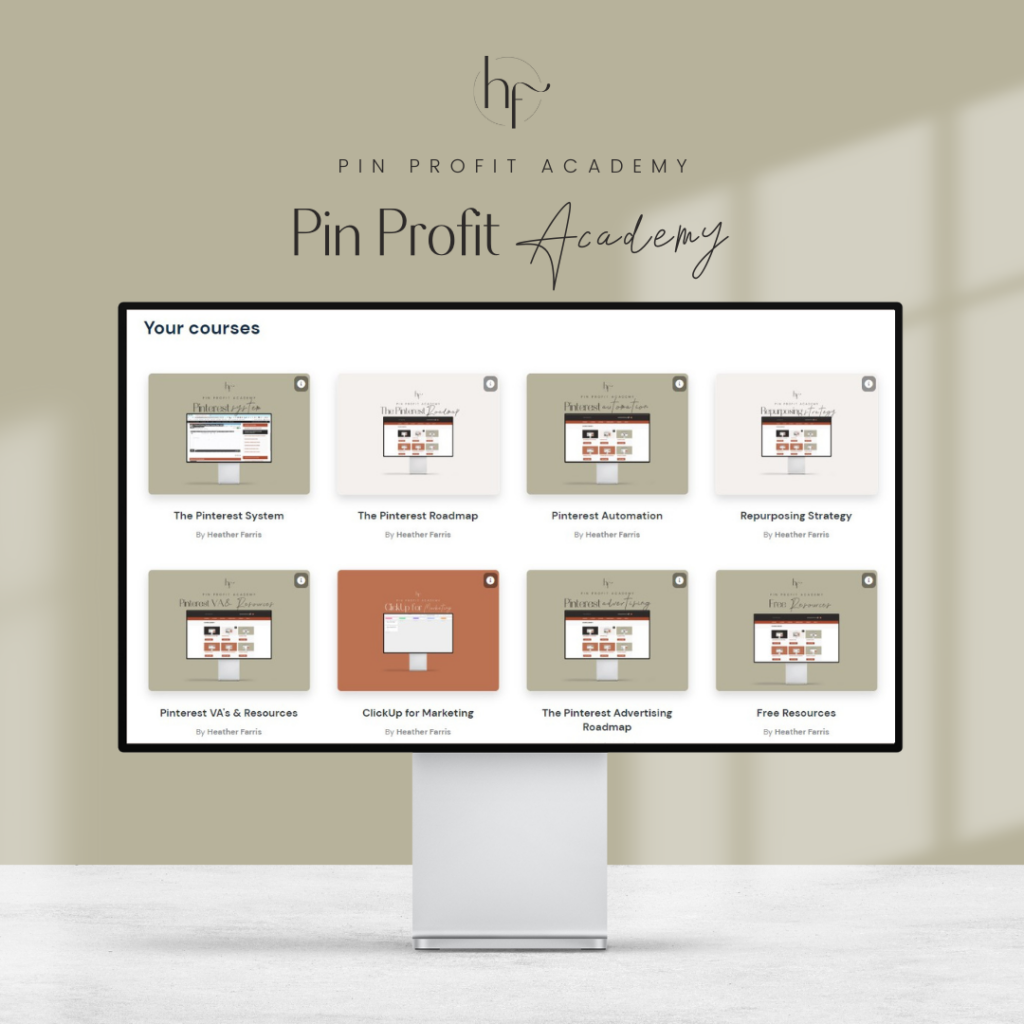
Pin Profit Academy
Marketing can be difficult and trying to figure it out on your own, especially with Pinterest, can be overwhelming.
I will show you how to double your traffic and sales without spending another minute on social media!
PPA is the only comprehensive membership program & community for creating, marketing & selling your products & services using Pinterest.
Pin it For Later

Heather Farris went to school for accounting and worked for years in banking and finance. After finding all of that entirely too boring she started her first blog in her basement in August of 2016. She has started 3 blogs in the marketing, motherhood and travel niches and used Pinterest to grow them all. She quickly became the go-to Pinterest strategist in her peer circles and has been implementing strategies, driving traffic and sales through organic and paid tactics for her clients. On this blog and her YouTube channel, as a renowned Pinterest marketing expert, she educates the public about clear and transparent marketing strategies to help them to grow on Pinterest and in other places online. She created Pin Profit Academy and helps small business owners just like you to master their Pinterest marketing strategy. Heather is now a Pinterest Educator, one of the very few sponsored by Pinterest.