

Pinterest Analytics 2025: What to Do With Your Pinterest Data
Needing to know what to do with your Pinterest analytics in 2025? Today we are going to cover how to find the most important metrics inside of your Pinterest analytics and what to do with them. We are going to cover:
- Where to find your data and how to read it
- What data to stop stressing over cuz it doesn’t matter
- How to create a 90-day action plan specific to your data
What’s New in Pinterest Analytics for 2025
Let’s first cover what’s new in 2025 with the Pinterest analytics dashboard. Some of you may be seeing the new dashboard roll out with some new toggle features right up at the very top. You can toggle between all pins, image pins, video pins, and product pins now. It will change everything that you see in the interface down below.

So that’s really the only new rollout or new feature inside of the analytics dashboard for 2025 so far. There may be more to come. There’s a lot of year ahead of us. But that’s awesome you can filter by types of pins now.
RELATED: Pinterest Analytics: A Simple Guide to Read & Analyze Your Data
The Core Pinterest Analytics Metrics to Track
These are the core three metrics in your Pinterest analytics that I want you to be thinking about and we’re going to focus on today:
- Impressions
- Saves
- Outbound Clicks
There are a couple bonus metrics that you might want to track, because those are going to tell you what content themes you should focus on. Those metrics are:
- Top pins
- Top boards
Obviously, the overall metrics on the account and what we’re tracking are important things, but also what is getting those clicks, saves, and all of that data is just as important. We want to track impressions, outbound clicks, saves. Then filter into that we want to see those three metrics with top pins and boards as well.
RELATED: What is Pinterest Relevancy & How the Pinterest Algorithm Works
1. Impressions: The Foundation Metric
Impressions are quite literally just how many times your pins have been put in the feed. Now this isn’t necessary the number of times people have seen your pin. It just means that it was in their feed.
To find your overall impressions for your account, or by top pins and top boards, from your Pinterest menu, go to ‘Analytics Overview’, and then you’re going to toggle to ‘Impressions’ in all of the toggle places as you scroll. You can do this with each graph of data sets with:
- Pin performance
- Product groups
- Top pins
- Top boards

Individual pin stats
There are individual-level pin stats that you can view, and you can actually find some interesting stuff inside of there. Click on your individual pins and look at the pin stats.
One of my favorite things to do when I’m looking at individual pin stats, is to look at what boards people are saving your pins to. These are their boards that they have named, not yours. So it kind of gives you some insight into their brain and how they view your content, which is really interesting.

Now individual-level pin stats can be customized by various filters and toggles too.
- Date range, up to 180 days
- Impressions
- Outbound clicks
- Pin clicks
- Saves
Of course, the boards that people saved your pins to are listed down below all the graphs.
RELATED: What is Pinterest Relevancy & How the Pinterest Algorithm Works
Why Impressions Matter
Now why do impressions matter? Number one: it indicates reach. If your pins are not getting impressions, people aren’t seeing them—then we have to do something about that. This to consider:
- What could be happening for them not to be getting viewed?
- Are the keywords not optimized properly?
- Are you not using keywords?
- Is your account just really brand new and it’s just not getting a lot of reach yet?
- Are you somehow getting put into a spam filter?
- Are you just not putting any sort of effort into your strategy at all, and you’re just throwing pins up?
Impressions indicate reach. If you’re not getting impressions, we need to go back to the drawing board. Now impressions are for top-of-funnel awareness in your marketing system. We need people to be aware of who we are in order to bring them down the funnel. Without impressions, none of the other metrics matter.
RELATED: Ultimate Full Funnel Pinterest Ads Strategy That Got 26X Return
2. Saves: Relevance and Engagement Signals
The next metric we’re going to talk about are saves. Saves indicate how relevant your content is to your audience and whether it’s worth coming back to again later.
Pinterest really cares about saves. They actually have that as one of their most important metrics among their training material and best practices and things. So keep that in mind that saves are definitely an important metric to know whether your account is engagement-worthy with your audience.
To find your saves you’re going to go to ‘Analytics Overview’, and you’re going to make the toggle changes to ‘Saves’. I like to go usually straight to the ‘Top pins’ to see which ones are getting the most saves.

Why Saves Matter
Saves matter because it indicates to you that your audience cares about your content and they want to return to it later. It can also help to boost your content in the algorithm and get people seeing more of your content. Saves also mean your pin will be engaged with likely more than once because it’s on their private boards.
If someone engages with one of your pins with a simple pin click, they’ll see a few more of your pins in their feed. If they save your pin, they will see even more pins of yours in their feed. If they click on your pin and go to your website, then they will certainly see more pins in your feed.
Saves are just a really strong signal that your content is inspirational, informational, it’s useful. But they’re also tied to future engagement, especially seasonal engagement trends. If they are shopping ahead of time, let’s say for Christmas, they’re doing that in September and October. Then they’re coming back to those pins that they saved closer to Christmas to buy those gifts, or maybe during Black Friday to see if you have a sale going on.
This is a really great way to judge what is going on with your Pinterest strategy and your audience. The more saves the more you know what your audience wants.
RELATED: Pinterest Trends: How to Use This Keyword Tool for Content Planning
3. Outbound Clicks: The Bottom-of-Funnel Metric
Now the next metric that matters a whole lot are outbound clicks. If you’re not getting outbound clicks, then you’re not getting traffic to your site. And not everyone is really looking for just an awareness strategy in their online business.
Outbound clicks tell us that people are going to our website and that they care enough about what’s on the other side to visit it. They’re ready to consume more, or look for the immediate solution now.
To find your outbound clicks, of course you’re going to go to the same place in your Analytics Overview. Then move all the toggles to ‘Outbound Clicks’.

RELATED: How to Get More Clicks on Your Pinterest Pins
Why Outbound Clicks Matter
Now why do outbound clicks matter? I don’t think I should probably have to say this—but, traffic. Traffic matters. And also if you’re looking to sell something, then traffic is a good indicator that someone is interested in what you’re selling. Getting them to your website is getting them one step closer to your cart.
Outbound clicks also signal bottom-of-funnel intent, especially if it is to a product. This is the stat that most people care about when they are running a Pinterest marketing strategy. What content are you putting on Pinterest that is turning into traffic on your website? And let’s identify what that is and track it over time so we can start to identify patterns.
Of course, top pins matter across all three of the things I’ve already talked about. So definitely be tracking what your top pins are and look at impressions, saves, and outbound clicks for each of your top pins. I typically track top 10 pins every single month for myself and clients.
RELATED: The Ultimate Pinterest Traffic Strategy for Bloggers & E-Commerce Shops
Don’t Let Your Data Disappear
Now, you should know that your data is deprecated after 6 months on Pinterest, so you cannot access it beyond 6 months. It’s really important that you go into your dashboard and you are recording this data so you have it to look back on later.
There is an export button at the top left of the analytics overview screen where you can actually export whatever view you have set up and filtered, and that is really nifty. Even if you don’t do anything with it right now, if you export it and save it for later.
Then when you review quarterly or year or year for optimizing your marketing plan on the platform, you have a history of data to work with.

Analyze What’s Working in Your Top Pins
When you’re looking at top pins and you are looking at those three metrics, I want you to start identifying what the themes are with your content that’s doing well.
- What are the pin formats?
- What are the pin styles?
- Is it an infographic?
- Is it a carousel?
- Is it a static image pin?
- Is it a video pin?
- What’s the content topic?
- What’s the keyword used?
- What’s the trend it was created for?
- Does it have a call to action?
- Does it not have a call to action?
I want you to notate these things down so you have a better idea over time and in a snapshot view. When you’re looking at content compared to each other, what’s actually performing and what’s driving the most engagement and traffic to your site.
How to Read and Use Your Board Stats
Board stats are at the very, very bottom of your analytics overview screen. Your board stats are going to give you a little bit of an indication of what content is performing right now with a big grouping of pins from how you’ve organized them.
- What boards are getting the most engagement?
- Out of those boards, how many impressions are you getting per board?
- What outbound clicks are you getting per board?
This can really give you an understanding of where you need to focus on your efforts. This can also give you an idea if you need to create more boards on the same topic but maybe a slightly different angle. As well as give you an idea of what boards maybe you need to work on and clean up and change and edit.
Or maybe if there are boards at the very end of your top boards list that are getting no engagement at all, maybe it’s because you haven’t pinned to them in 4 years. Or maybe it’s because it’s not relevant to your niche anymore and it just doesn’t matter. You need to get rid of it. That’s okay too. Just review.
RELATED: The Ultimate Guide to Create Your Pinterest Board Strategy
Be Cautious With Changes to Your Boards
Now, a little word of caution. I would not go and change your board titles and descriptions fast. Start slowly. Do one or two and just watch your analytics over time. I also wouldn’t go deleting things right off the bat.
Make them secret if you no longer want them visible. That way, if you do need to revert anything back, you can do so. They’re not gone forever, you’ve just made them private to you. You can also archive boards, and you can unarchive them. This is a lot less permanent than deleting boards.

I’ve had too many students go in and completely gut their Pinterest profiles and then come to me a week later saying, “Hey, my analytics dropped from 175,000 to 50,000 views and I don’t know what’s going on.” Chances are it’s the multitude of changes that you implemented on your Pinterest account all in one go. That’s normal.
If you are changing a lot of things on your Pinterest account for boards and you don’t want them anymore, you don’t talk about them anymore, then great, stay aligned with your content topics. But expect to see big changes in stats too until things stabilize with new consistency.
RELATED: How to Create Pinterest Board Sections: When & Why to Use Them
Maintain & Refresh Your Boards Like a Storefront
Now I want you to think about your boards as like a bit of a department store. They need to be cleaned. They need to be refreshed, and pinned to regularly.
Unless it’s a seasonal board—let’s say it’s a Christmas board and it’s April—you don’t need to be pinning to your Christmas board in April. You can let that one ride until the seasonal trends come, which, by the way, is like July or August. Always months in advance.
But again, the boards on your profile, try to keep them fresh. Continue pinning to them. Take the different pins you’re creating and look at the boards that you have available and which ones you haven’t pinned to recently—and pin to them. Take your top performing boards and maximize them.
RELATED: Pinterest Trends: How to Use This Pinterest Keywords Tool for Content Planning
Your 90-Day Audit Plan From Your Pinterest Analytics
Inside of my Free Resource Library, you can grab my Pinterest 90-Day Improvement Plan, an audit sheet to track where you are and how to improve your account based off all the analytics we’ve been discussing today.

Free Resource Library
Speed up your business growth with a library of templates, strategy guides & more!
Download your 90-Day Pinterest Improvement Plan worksheet inside to audit your profile analytics for continued growth.
Step #1: Audit Your Pinterest Account
You’re going to actually audit your Pinterest account with the sheet you’ve downloaded from above. I want you to audit your Pinterest account for the last 90 days.
Step #2: Record Current Month
Then I want you to start with today. Start with month one—which is now—and go ahead and record that into your sheet. This is the start of your consistent tracking.
Step #3: Reflect & Identify Pain Points
I want you to reflect and identify potential pain points in your Pinterest marketing strategy. As yourself these questions, or not what issues you may see that you don’t want.
- Do you have boards that need updating?
- Do you have pins that just aren’t getting views?
- Why are they not getting views?
There are some reflection questions you can ask yourself in the worksheet as well, so you can start to identify some of these problem areas and gap opportunities.
Step #4: Set Goals for the Next 90 Days
Based on what you did in the last 90 days, you’re going to set some goals for the next 90 days. The analytics that you have marked down are going to be your benchmark to start from.
Step #5: Try 2–3 Experiments
Try two or three things with a new experiment. If you identify something in your analytics that seems to be working, try and duplicate it or apply similar characteristics.
For example, let’s say there is one pin format that works really, really well because you’re noticing multiples of it getting lots of traction. I would suggest you try an experiment where you test out creating more pins using that same pin format, then see how they start performing.
Step #6: Track Monthly Progress
Track your monthly progress. I really want to challenge you to be tracking your Pinterest analytics month over month. This worksheet will help you to do that.
Step #7: Rinse & Repeat
Simply rinse and repeat month after month. If you’re putting so much effort into your Pinterest marketing strategy, you definitely want to be seeing growth in your Pinterest analytics. And I hope that this worksheet can help you to do that.
RELATED: The Complete Pinterest Marketing Strategy I Would Tell My Friends
Final Thoughts on What to Do With Your Pinterest Analytics Data
That’s it on what to do with your Pinterest analytics data, how to use it, and track it for optimizing your marketing plan. Next steps are to dig even deeper into your personalized marketing plan for your specific small business or platform.
If you need more support and assistance and guidance on next steps specific to you, come join Pin Profit Academy. It’s the place where we do all of the Pinterest marketing training with me—yours truly. You get direct access to me as well as all of my Pinterest marketing resources.
So come on over, and we’ll see you inside.
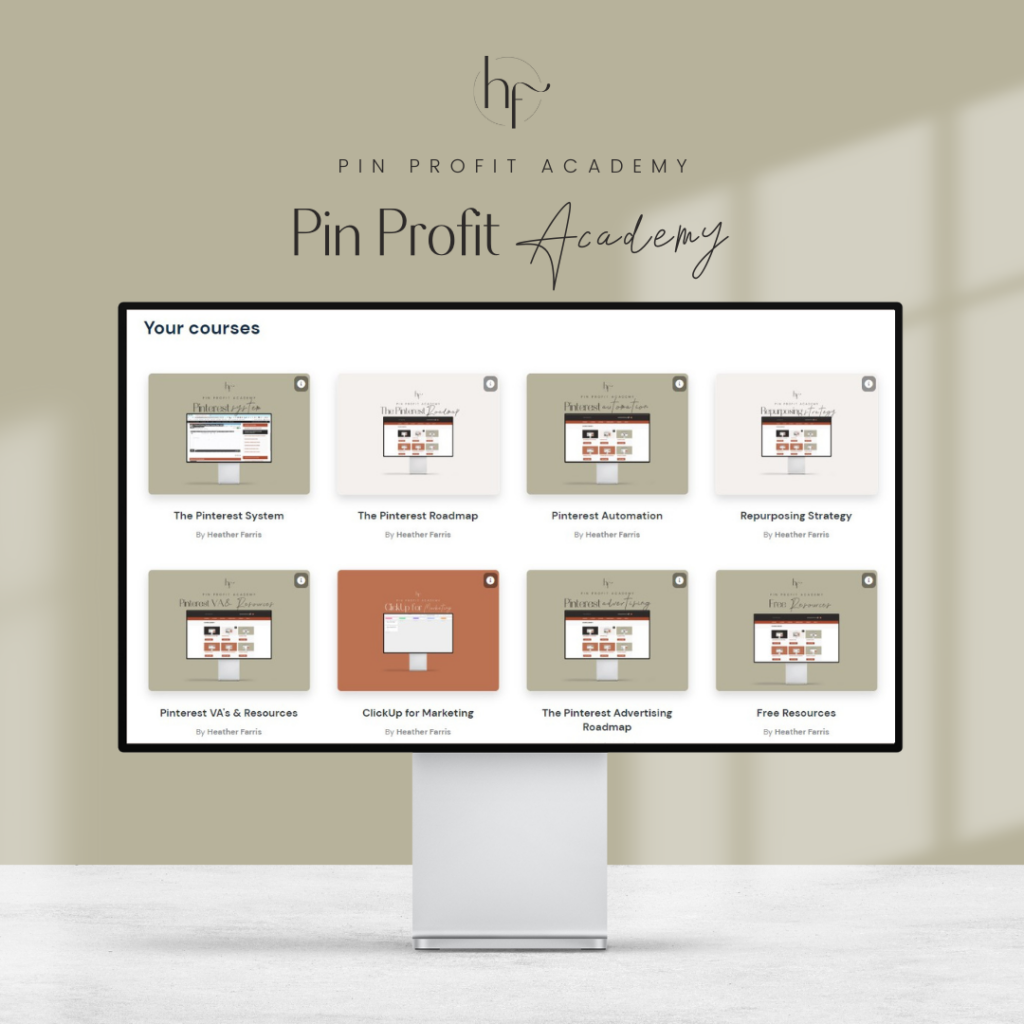
Pin Profit Academy
Marketing can be difficult and trying to figure it out on your own, especially with Pinterest, can be overwhelming.
I will show you how to double your traffic and sales without spending another minute on social media!
PPA is the only comprehensive membership program & community for creating, marketing & selling your products & services using Pinterest.
Pin it for later


Heather Farris went to school for accounting and worked for years in banking and finance. After finding all of that entirely too boring she started her first blog in her basement in August of 2016. She has started 3 blogs in the marketing, motherhood and travel niches and used Pinterest to grow them all. She quickly became the go-to Pinterest strategist in her peer circles and has been implementing strategies, driving traffic and sales through organic and paid tactics for her clients. On this blog and her YouTube channel, as a renowned Pinterest marketing expert, she educates the public about clear and transparent marketing strategies to help them to grow on Pinterest and in other places online. She created Pin Profit Academy and helps small business owners just like you to master their Pinterest marketing strategy. Heather is now a Pinterest Educator, one of the very few sponsored by Pinterest.