

The One Mistake With Ranking Products on Pinterest
There is one mistake with ranking products on Pinterest that I see so many e-commerce shop owners doing all the time. If you’re making this mistake on your website, and you’re trying to market your catalog on Pinterest, this could be why your product pins aren’t doing well.
Problems with your products on Pinterest
You may be seeing that your product pins aren’t ranking in Pinterest search results. People in your audience are not finding them. They’re just not showing up when they should be. So let’s cover how to fix this in just a few short minutes here in this blog post today.
Now to be clear, it might take you a lot longer than a few minutes to actually have a permanent fix for this. Because honestly, most people do this wrong. But I’m going to show you the solution that you can start applying moving forward. So let’s dive in.
RELATED: Pinterest Mistakes Holding You Back From Success
Examples of product listings on Pinterest
Here is one of my product pins in my shop and you can see the product tags and pricing that is synced over from how it’s set up.

It doesn’t matter if you’re pinning for a store on eBay, Amazon, Shopify, Etsy; they can all work with the Pinterest catalog functionality. This next example is just some earrings I found, but you can see there is shipping info and even star ratings from buyers.

RELATED: How to Make Pinterest Product Pins that Convert
Where ranking products on Pinterest get their info
When set up correctly, Pinterest pulls all your product pin info directly from your shop listing. With my example here, you can see how it all pulls the same pricing, description, etc. for the pin.

Even though your shop listing description has a lot more characters (I think Shopify goes up to 5,000), it will pull over the maximum into your pin description (up to 800 characters) to maximize the information as a product pin.
RELATED: How to Tag Products on Pinterest and Make Money With Your Pins
The mistake with ranking products on Pinterest
All that said, here is the major mistake that most e-commerce marketers are making when it comes to Pinterest, and making sure your products show up for the right people. It’s that you’re not using keywords in your listing that help you get found correctly, within you:
- Product title (pin title)
- Product description (shop listing description)
Usually sellers are just putting the internal business names and product descriptions on their listings. But this isn’t what buyers are searching or looking for. That could be something like “Boho earrings green set #12” instead of “Mermaid gold boho hoop earrings”. The former is for your internal catalog to keep products straight. The latter is more of what a buyer is wanting to find with correct descriptors.
RELATED: How to Write Pin Titles on Pinterest That Make People Want to Click
More specifically about product descriptions
I will go even further to emphasize an additional mistake within product descriptions, and that’s not utilizing the amount of space that you have available to tell someone about your product. Most people talk about how “awesome” it is and keep it short and sweet, to just “buy!”
But within those 5,000+ characters, you need to be explaining how your product works, how to care for it, use it, store it, pack it, travel with it, etc. Where is all of that information? Features of the basics are vital, yes. But buyers also want to know as much as they can about your product.
So your description should contain more keywords that cover all of those other areas, not just the main details. You can use AI to help write your descriptions, lengthen them out. You can give it a list of your applicable keywords, as well as broad commercial keywords that apply.
RELATED: How to Use Tailwind Ghostwriter For E-commerce Shop Product Descriptions

The Pin Bot for ChatGPT — Your Pinterest Marketing Sidekick
Stop spending hours writing pin descriptions, SEO blogs, or brainstorming your Pinterest strategy.
The Pin Bot for ChatGPT is your ready-to-use Pinterest marketing assistant, pre-loaded with proven templates so you can create, plan, and optimize content in minutes.
Why this matters before even using Pinterest
Some shop owners using Pinterest not getting consistent results seem to jump to hiring a Pinterest manager thinking it’s going to help with sales, but the root of the problem is most like just what we’ve covered: not using keywords correctly and thoroughly in all pieces of your product listings.
Now, as a Pinterest manager, when you hire me and I come around to your website and I pull URLs and I’m making pins for everything, I cannot properly do my job because your website or shop is not properly optimized this way. So it doesn’t matter how many pins your Pinterest manager creates and publishes.
Growth might happen, but it’s not going to have the best opportunity to work. Pinterest is really time wasted until you have done this optimization work. Please optimize your listings. It will not only help you essentially on Pinterest, but very much on Google too. Google doesn’t just index well optimized blogs and big websites, it pulls your shop listings too.
RELATED: How to Optimize Your Blog Content for Pinterest Users
How Pinterest overrides your copy
All of the above is important, having your shop listings optimized first, and here’s why. Because as soon as you link your catalog to this platform, Pinterest is going to overwrite any scheduler and replace it with your website copy.
That’s the broken link in the chain lots of creators on Pinterest don’t realize. You can insert any title and description into your product pins with any scheduler, and Pinterest will still pull that meta from your listing URL because it’s designated as a product pin.
Now you want all the product pin details and tagging, so don’t skip that. Just remember your listings are primary. So also, instead of writing separate titles and descriptions for those product pins, pull directly from the product URL to start with.
RELATED: How to Tag Products on Pinterest and Make Money With Your Pins
Final thoughts with ranking products on Pinterest
When you optimize your product titles with searchable keywords, expand your descriptions with meaningful, buyer-focused details, and stop relying on internal naming conventions, your products on Pinterest gain a real opportunity to rank, surface in search, and drive qualified traffic.
Strong listings don’t just support Pinterest, but they improve visibility across every platform your catalog feeds into. The result is better discoverability, stronger click-through rates, and more consistent sales potential.
If you’re ready to turn Pinterest into a strategic traffic driver instead of a guessing game, join Pin Profit Academy for the next steps in building a focused, profitable Pinterest marketing plan. If you want more Pinterest marketing support and help and strategy, make sure you join me inside the academy where I can help you one-on-one. See you inside!
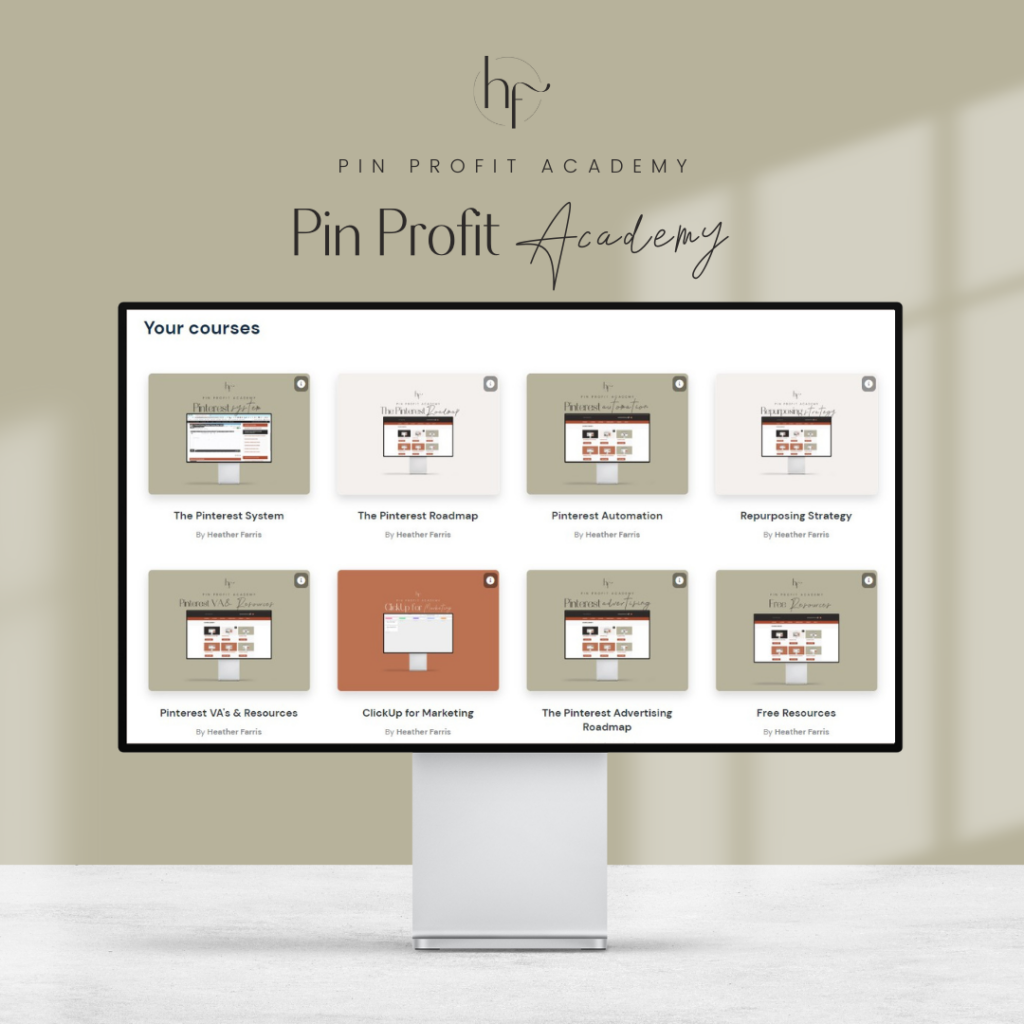
Pin Profit Academy
Marketing can be difficult and trying to figure it out on your own, especially with Pinterest, can be overwhelming.
I will show you how to double your traffic and sales without spending another minute on social media!
PPA is the only comprehensive membership program & community for creating, marketing & selling your products & services using Pinterest.
Pin it for later


Heather Farris went to school for accounting and worked for years in banking and finance. After finding all of that entirely too boring she started her first blog in her basement in August of 2016. She has started 3 blogs in the marketing, motherhood and travel niches and used Pinterest to grow them all. She quickly became the go-to Pinterest strategist in her peer circles and has been implementing strategies, driving traffic and sales through organic and paid tactics for her clients. On this blog and her YouTube channel, as a renowned Pinterest marketing expert, she educates the public about clear and transparent marketing strategies to help them to grow on Pinterest and in other places online. She created Pin Profit Academy and helps small business owners just like you to master their Pinterest marketing strategy. Heather is now a Pinterest Educator, one of the very few sponsored by Pinterest.