

How Pinners Discover New Content on Pinterest
Understanding how pinners discover new content on Pinterest is essential in understanding how your content is used in the feed.
Knowing how Pinterest shows pins to viewers, you’ll know exactly what you can do to:
- improve the SEO (it’s different than Google)
- enhance the eye-catching looks of your pins
- how to get people to engage with your pins
I’m going to walk you through the most common ways that Pinterest pinners actually find your content on Pinterest today, and what you need to do to capitalize on that.
You’re probably only accustomed to a few of these. But we’re going to cover each one and how you’re going to optimize your content so your pins are seen in all these places.
- Search bar
- Related feed
- Home feed
- Profiles & profile searches
- Boards
- Product feed
- Video feed
- Explore feed
In the Pinterest search bar
So, first things first, we’re just going to start with the most common way how pinners discover new content on Pinterest, and that’s the search bar. A lot of people just go straight there and search for something like “sugar cookies” if they want a recipe.
But before they even hit “Enter” to run the search, you can show up directly in the suggested search terms in the search bar. Like this baking profile that came up, even without the keywords ‘sugar cookies’ in their profile name.

Then, of course, once they hit ‘Enter’, anything that shows up in the search results that is optimized for that search will show up. This is the most similar result process like searching into Google or a search engine.
RELATED: Pinterest Search Ads: How to Test a Pinterest Advertising Strategy w/o Spending a Fortune
Related pins feed after engagement
Now, the next way how pinners discover new content on Pinterest is in the related feed. The related feed is what shows up next to or underneath the original pin that they click on.
Let’s say from the search feed they find a cookie recipe pin that they want to look at. They click on it and it gets bigger on their screen. Then they’re going to scroll down on their phone, even see to the right on a desktop, and there’s going to be related content underneath.

So even if your pin doesn’t get clicked on, or show up in the results, your pins can be suggested after the fact with other pins that aren’t even yours. Or, if a pinner clicked your pin to begin with, the related feed will suggest more of your related pins as well.
RELATED: What is Pinterest Relevancy & How the Pinterest Algorithm Works
Pinterest home feed
Now, going all the way back to the most original way that someone might actually find your content on the platform, and that’s simply inside the home feed. The home feed is where someone is going to start if they are logging in and they haven’t even searched for anything.
This is where pins are placed based on:
- previous searches
- previous engagements viewers have made (clicks and saves)
- previous categories they’ve been browsing in
- if they’ve engaged with any advertising on the platform
- pins from profiles they follow
- pins from boards that they have previously saved
Pinterest is going to try and engage them again and prompt them to continue engaging with those pins again. So if you have built a strategy on Pinterest that encourages engagement, then chances are your content is going to show up in their home feed.
RELATED: How to Increase Pinterest Engagement With This Single Tactic
Profiles and how they’re organized
Say a pinner finds your profile in the search results and clicks on it, or clicks through from a pin in their feed. Once you go to that profile, you can now engage with any of the content on the profile itself.
Whether you want to engage with the pins they’ve created recently or the boards that they have saved pins, or you want to click on their profile link and go straight to their website. So if you have all of your content organized and optimized well, someone right on your profile will see more of exactly what they want.
RELATED: Pinterest Profile Audit: How to Improve Your Profile
Boards from search filters
The next way that people are going to find content from you is through boards and how they show up in filters. This is not only pins that you have saved to your profile’s boards, but pins that people have saved to their own boards as well.
Let’s say you save a bunch of my pins and someone else comes along and they engage with your board. They see my pins on your board and they engage with them. They didn’t have to see my pins in their feeds in order to find them, but indirectly through you, and vice versa.
Boards are a place where anyone on the platform can curate content based on topics or just how they want to organize their saved pins. This is where it’s everyone’s content that can be seen almost anywhere, because of boards.
Now to find boards on Pinterest without digging into profiles, people can search for a term, click the filter on the far left, choose boards in the list, and then they will just see a list of boards based on that topic.

RELATED: The Ultimate Guide to Create Your Pinterest Board Strategy
Pinterest product catalogs feed
Now, going back to that little filter menu, the next thing we’re going to talk about is the product feed. If someone were shopping on Pinterest and they knew exactly what they wanted, let’s say, leather boots, they’re going to search for that and filter for products.

From that Products feed, you’ll now see pins of products that are sold on third party platforms, whether it be individual shops or big platforms
- Shopify
- Etsy
- eBay
- Amazon
- Poshmark
A common question I get is about digital products like courses sold on teaching sites like Udemy or Teachable. Will those be listed in the product feed if I sell it? Generally, no. The only way to get your products listed in a product feed or to be a product pin is for them to have a markup with data from the sales website that shows that they are a product.
For example, say I sell access to a course in my Shopify store, but I also have that course listed in a traditional funnel on my website. I make pins for both places though it’s the same product, and publish them on Pinterest. The one listed in the Shopify store will be in the catalog feed, but the one on my website pages will not.
RELATED: Pinterest For E-Commerce: Pinning Tactics for Product Sellers
Video feed for video pins
Now, back to that filter menu again. Pinners looking for specific tutorials or travel ideas where they’d like to see the actual process, or see the layout of a location perhaps, they’re gonna want video. So your video pins specifically can show up when this filter is applied.
Let’s say that someone wants to learn how to apply the winged eyeliner look. Literally watch it be done without having to click through to a post with written instructions. All they have to do is filter for videos and your pin can show up right there.

RELATED: How To Make Video Pins For Pinterest With Canva
Explore feed curations
Now, the last one that I want to talk about today is the Explore feed. Right at the Home feed, there’s two little tabs. It says ‘For you’ and ‘Explore’.

If your content has been curated by Pinterest, then it will be shown there. Pinterest gathers ideas of topics that are really popular and puts them in the Explore feed in a nice curated manner.
Pinterest can choose your content to feature from the editorial submissions that I highly recommend you be making through their creator calendar. Or they can pin your content if you’re part of one of the creator programs they have at times.
RELATED: Pinterest Trends Keyword Tool: How to Use This Trends Tool for Content Planning
Optimizing your content for the feeds
Now that you know the eight different ways how pinners discover new content on Pinterest, I would challenge you to go into all of those places. Take a look at how your Pinterest pins might be showing up there and see what ways you can actually optimize it.
- Is your pin title or text overlay really too small and hard to read?
- Is the font too thin?
- Is the image saturation just really poor?
- What about the opacity?
- What about the actual images themselves?
- What can you improve to make them all more user friendly?
- Are the pin descriptions optimized with Pinterest keywords?

Pin Templates for Digital Content
Your blog content, podcast episodes, and digital offers deserve better than “just okay” graphics.
These Pinterest Pin Templates for Canva are designed specifically for content creators who want to promote information-rich content—fast, without sacrificing quality.
There are always ways to improve your pins, especially with the keywords and backend adjustments versus the front end visual. Ensure you’re optimizing in all the places is the best of best practices that I stress. Because at the end of the day, it matters more how your new pins are optimized.
RELATED: How to Use Keywords to Optimize Your Pins on Pinterest
Final thoughts on how pinners discover new content on Pinterest
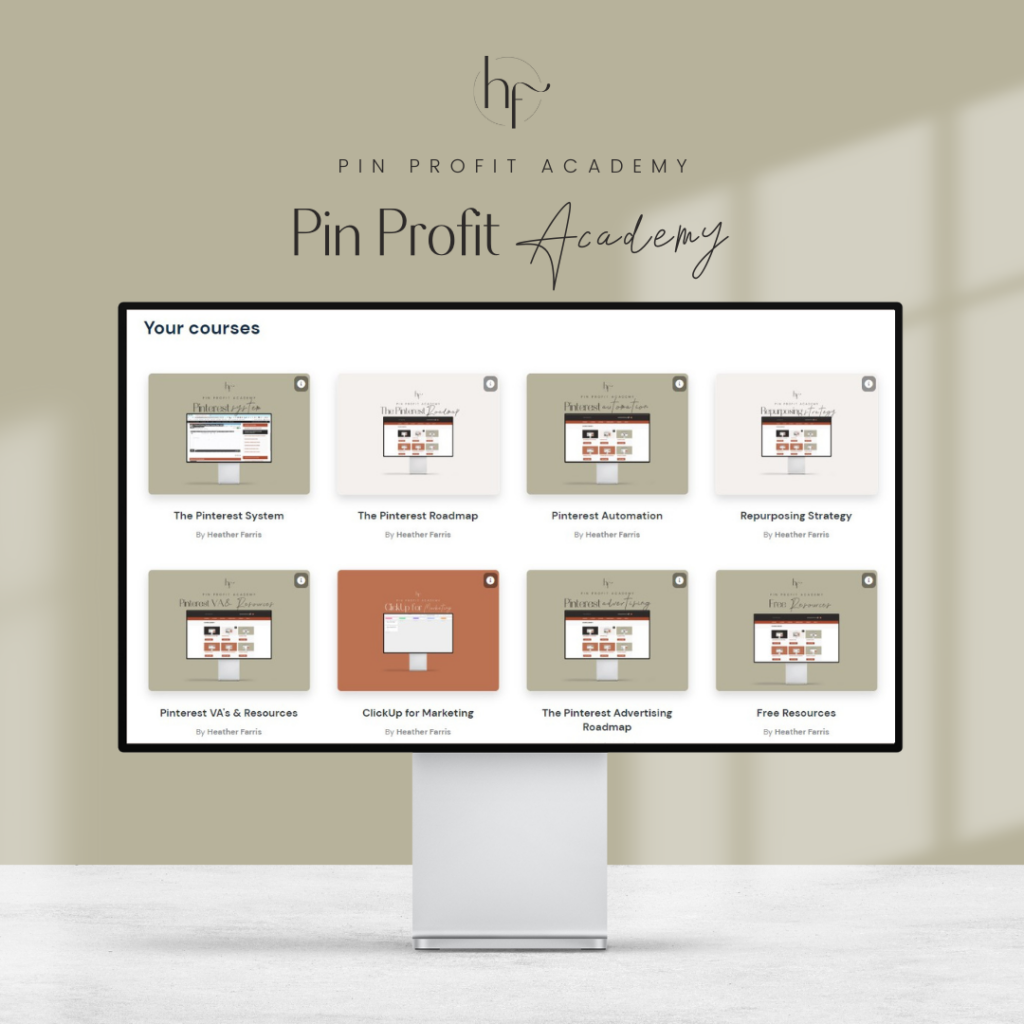
Those are all the different ways how pinners discover new content on Pinterest. Last thing, if you need more help with your Pinterest marketing strategy, not just tips, but also everything you need to apply in order to be truly successful on the platform, come join Pin Profit Academy.
Pin Profit Academy
Marketing can be difficult and trying to figure it out on your own, especially with Pinterest, can be overwhelming.
I will show you how to double your traffic and sales without spending another minute on social media!
PPA is the only comprehensive membership program & community for creating, marketing & selling your products & services using Pinterest.
Not only will you receive all the courses, templates, resources, and systems that will support everything for your Pinterest strategy; you’ll have direct access to me and our community to help you every step of the way. Come learn the ultimate Pinterest traffic strategy and more. See you inside!
Pin it for later


Heather Farris went to school for accounting and worked for years in banking and finance. After finding all of that entirely too boring she started her first blog in her basement in August of 2016. She has started 3 blogs in the marketing, motherhood and travel niches and used Pinterest to grow them all. She quickly became the go-to Pinterest strategist in her peer circles and has been implementing strategies, driving traffic and sales through organic and paid tactics for her clients. On this blog and her YouTube channel, as a renowned Pinterest marketing expert, she educates the public about clear and transparent marketing strategies to help them to grow on Pinterest and in other places online. She created Pin Profit Academy and helps small business owners just like you to master their Pinterest marketing strategy. Heather is now a Pinterest Educator, one of the very few sponsored by Pinterest.