

Why You Need to Optimize Your Website for Pinterest
If you haven’t taken the steps to optimize your website for Pinterest, you are losing out on massive traffic. That traffic could lead to sales, income, growth of your email list, etc. Using Pinterest for your brand is a great way to drive traffic back to your website. But making sure your actual readers can save to Pinterest from your website or store is so essential!
It’s something that a lot of people actually completely fail at doing. So today I want to talk to you about why it’s important to optimize your website for Pinterest and how to do it right.
Why Pinterest Is Worth It
Let’s actually go through a few fun facts first about why Pinterest is worth utilizing for your small business or blog platform–why it’s worth the time to optimize your website for Pinterest.
- Pinterest sends about 33% more referral traffic to shopping sites than websites like Facebook.
- Next is that 96% of all searches on Pinterest are completely unbranded, giving you the great opportunity to surface your content.
- Pinterest content servability lasts for years instead of hours or days like social media, providing evergreen traction and impact.
Pinterest content has so much more lifespan inside of it because of the nature of the platform’s design. A recent Tailwind study actually found that the top pins for creators were being surfaced 1 to 2 years later.
A quick comparison: Instagram content can die within 24 to 48 hours—Pinterest content can live for years to come because it incorporates longterm SEO like blogs and YouTube videos.
Common Mistakes That Hurt Pinterest Traffic
Now, there are right ways to use Pinterest, and wrong ways too. These are the common mistakes you want to avoid even from the very start of using the platform alongside your blog, website, or store.
Mistake #1: No Pinnable Images
Not having pinnable images inside of your content. This means you don’t have images that make great pins. Not all of your images must be pin-worthy, but at least a few need to. Mistakes with images I see are:
- they’re not ideally sized for Pinterest
- there’s no text overlays or keywords descriptors on them
- they’re not mobile friendly, meaning you’re viewers can’t read what’s on them from their phones
RELATED: How to Get More Clicks on Your Pinterest Pins

Pinterest Templates for Canva
If you want traffic don’t rely on something just whipped up! Speed up your pin creation by using templates to get more pins out faster and more often.
These Pinterest templates are great for video content or blog posts & are ready to go. You can start creating pins on Pinterest in minutes.
Mistake #2: Ignoring Pinterest SEO
Completely ignoring Pinterest SEO. If you’re not at least doing some due diligence with Pinterest keywords, before you publish your blog posts and make Pinterest pins, you’re completely missing out.
There are three tools that you can use right on Pinterest for free to find keywords for your content: the search bar, the trends tool, and the ads manager. Using SEO in your:
- pin titles
- pin descriptions
- board titles
- board descriptions
- text overlay that you put on the pin…
… is crucial in order for that content to get indexed properly. It needs to be found by the audience that you want it to be found by, whether your audience is pinning it from your website, or whether you are.
RELATED: A Step-by-Step Guide to Pinterest SEO Strategies to Boost Traffic
Mistake #3: Not Enabling Rich Pins
This is often brought up, and it’s not enabling rich pins on your website. Rich pins just allow extra metadata to come over from your website—whether it’s shop listings, blog posts, recipes, or whatever. Rich pins allow Pinterest to index that extra metadata on your pins, making them look much more complete and value packed.
Mistake #4: Slow Websites
If your websites are crawling, lots of popups, lots of things getting in the way, links are broken, you have 404 pages, things are redirecting to weird places—this is not great for user experience.
Your users will not pin your content for you, nor will Pinterest users stick around once they come from your pins to your website. So let’s make sure we are optimizing our websites for speed, and user experience.
Full Blueprint: How to optimize your website for Pinterest
There are four major steps to optimize your website for Pinterest users, with lots of details with each. The good news is that most of these things only need to be set up once. While the rest will become second nature as you continuously employ your Pinterest strategy that you won’t think twice if you’ve forgotten anything.
Step #1: Make Your Website Pinterest-Friendly
To start, install your Pinterest ‘Save’ button. Whether this is with a plugin that you are using, or something that you are installing with JavaScript or HTML on the back end of your site, either works fine. I recommend:
- the Yoast plugin, this is also great for SEO (we’ll discuss later)
- the Save Button Builder from Pinterest itself
- the Social Warfare plugin, which I still personally use because it optimizes your descriptions as well
Next, add alt text to all of your images. This is to make it easier for people who need to use screen readers to be able to use the platform. Let’s not leave out anyone that needs that extra support in order to enjoy your content. It also supports great SEO as well.
The last thing is embedding pinnable images into your content. Whether they are hidden behind sharing buttons, or visible right inside of the blog post or the products, both work. Let’s make sure our images are super pinnable so your viewers want to pin them as well.
RELATED: How to Create Fresh Pins for Pinterest Using Canva
Creating Pinnable Images
If you’re an ecom store owner, or sell your own products, then make sure that you have vertical images in your shop listing photos. Keep those images with great white backgrounds, and also in lifestyle settings for best display.
If you’re a content creator, a blogger, or a service provider, that means embedding pinnable images in your blogs and pages. Have keyworded text overlays on them and calls-to-action, inside of the blog content, or uploading them behind those sharing buttons from whatever plugin you use.
RELATED: How To Make Pinterest Pins For Physical Products
Step #2: Learn and use Pinterest SEO
Pinterest SEO is different from Google SEO, but equally important. After you’ve done your keyword research, use your long-tail keywords in all of the relevant places.
- Pinterest display name,
- Pinterest bio section (which is your About section)
- board names
- board descriptions
- pin titles
- pin descriptions
- text overlay on your pin images
These are all opportunities for you to use Pinterest SEO in order for your content to be surfaced and indexed properly by Pinterest. But it’s also applicable on your personal websites and content. So you really want to optimize all of those places in order to get the most reach.
RELATED: 6 Places to Use Keywords to Optimize Your Pinterest Profile
Bonus Ways to Maximize Pinterest SEO
A great way to apply this is using Pinterest trends. Do a little bit of content planning and use those queries inside of trends to create content, or answer questions inside of existing content that are Pinterest friendly.
A lot of people actually completely miss out on the fact that they can create Pinterest images for the content inside their blog posts, not just the single post itself. This also supports Goggle SEO immensely.
For example: let’s say you are creating a blog post on five different ways to use a cast iron skillet. You could make a Pinterest pin for each of those five ways described in your blog, and then find a Pinterest query that will match each one of them for your keywords.
RELATED: Pinterest Trends: How to Use This Keyword Tool for Content Planning
Step #3: Enable Rich Pins
Implement Rich Pins and enable the schema markup that will turn your regular content into rich content on Pinterest. This is easiest done for websites like Shopify because it’s automatic. If you have a shop there, make sure this is all enabled in your settings.
It is really easy to do for WordPress websites if you use a plugin like Yoast or Social Warfare. You can just go into the settings of either and turn a couple of things on and you’re good to go.
Now for Squarespace or other websites, you will need to visit the Pinterest Help Data for full instructions. I’m not a developer so am unsure of the other less common sites, but everything you’ll need in case is there.
Types of Rich Pins
The three main types of rich pins I can inform you about are:
- article rich pins
- product rich pins
- recipe rich pins
Recipe rich pins include:
- Serving sizes
- Ingredient list
- Cook time
- Diet preference (if toggled on)
- Title of the recipe
Article rich pins include:
- Title from the post
- Author name
- A little snippet of text from the blog post (called preview or description)
- The button that says things like “Visit site”
Product rich pins include:
- Current price
- In stock or out of stock info
- Other relevant data from the product listing
RELATED: How to Enable Rich Pins for Your Website (WordPress, SquareSpace & Shopify)
Recipe Rich Pin Example
Now you might think that recipe posts are just articles too. But in reality they have their own schema markup, and they can come over to Pinterest, making everything fancier. The full list of ingredients that you would need to cook this recipe, and maybe even a preview of some instructions.
It can even come over with the rating of the recipe, and the button text on the actual recipe pin might be different. So you might see text sometimes that says like “Make This” instead of “Visit Site,” for example, which is preferred if you’re a recipe blogger.
I found two similar pins for you to see the difference. I searched “Crock Pot Stew” and found one that is not rich pin enabled, while the other is. You can see the ingredient list on the second one. I had to zoom out to screengrab it for you, and had to cut-off the full pin image, but you’ll see.

Step #4: Improve Website Speed and User Experience
Make sure that when people land on your website, you do everything to help them want to stick around. Or even want to come back again, with a fast loading site that serves up well.
You can do this by:
- Compressing your images for faster loading using a lazy-loading style plugin. I personally use a plugin called Short Pixel to help me with this on WordPress.
- Make sure your site is mobile friendly. This can vary on where to setup, depending on your site theme and design.
You actually need to go and look at your site on mobile, regularly. Anytime I publish a new web page or blog, I go to double check and ensure it’s clean and functioning well on both desktop and mobile.
And the last thing that you can do to improve user experience—and this is just a really easy win—is to improve your internal linking and add any relevant information that you mention in the post at the bottom of the post, or throughout. This also supports Google SEO rankings.
BONUS: if you talk about products in your blog post, make sure they’re linked. If you talk about newsletter opt-ins, make sure they’re linked. If you share other articles that are relevant or sources that are relevant, make sure that you link those as well.
Final Thoughts on How to Optimize Your Website for Pinterest
That is the synopsis of how to properly optimize your website for Pinterest, not only pinners, but everyone on the internet—especially people who want to save content to Pinterest on your behalf.
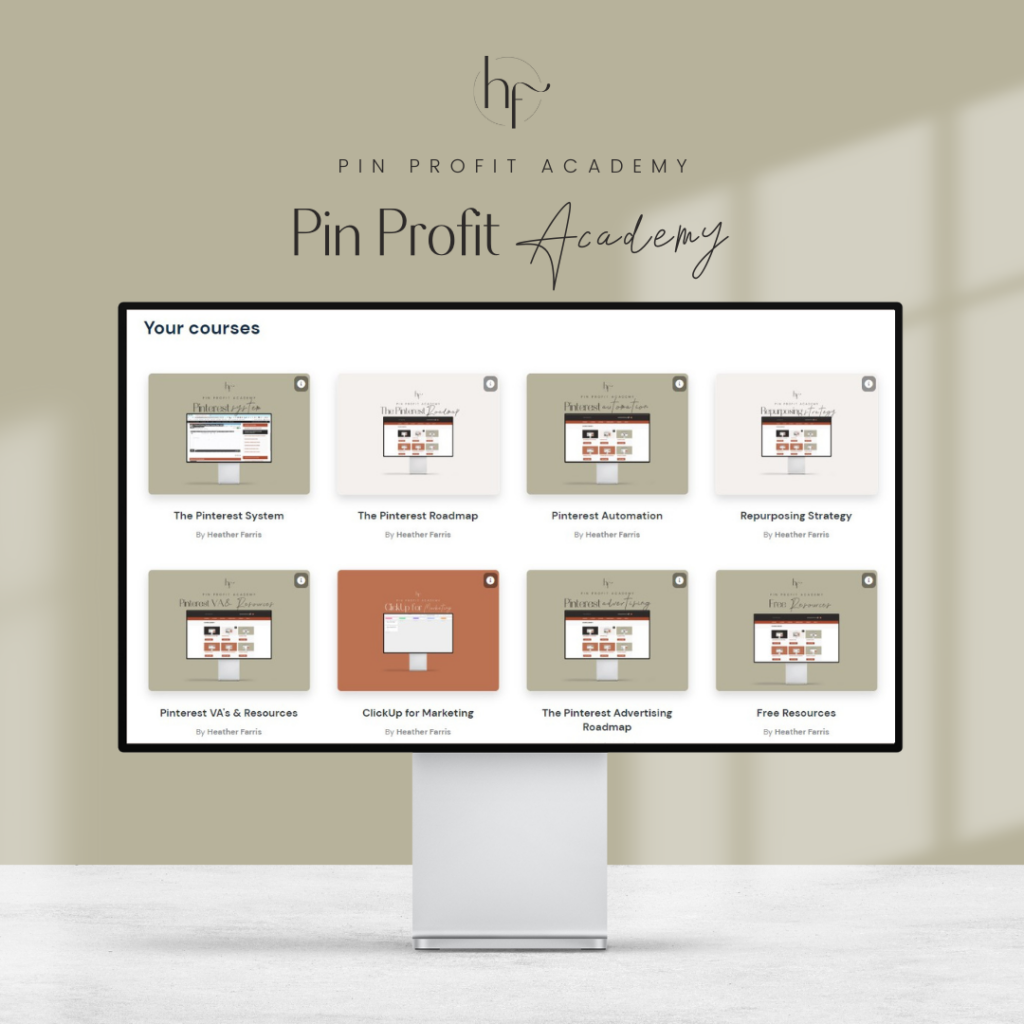
If you’re looking for more resources on how to make your Pinterest strategy even better, whether you’re just beginning or a seasoned marketer, come to Pin Profit Academy and gain all the steps, templates, and processes you need to implement to master your use of Pinterest with your small business. See you there!
Pin Profit Academy
Marketing can be difficult and trying to figure it out on your own, especially with Pinterest, can be overwhelming.
I will show you how to double your traffic and sales without spending another minute on social media!
PPA is the only comprehensive membership program & community for creating, marketing & selling your products & services using Pinterest.
Pin it for later


Heather Farris went to school for accounting and worked for years in banking and finance. After finding all of that entirely too boring she started her first blog in her basement in August of 2016. She has started 3 blogs in the marketing, motherhood and travel niches and used Pinterest to grow them all. She quickly became the go-to Pinterest strategist in her peer circles and has been implementing strategies, driving traffic and sales through organic and paid tactics for her clients. On this blog and her YouTube channel, as a renowned Pinterest marketing expert, she educates the public about clear and transparent marketing strategies to help them to grow on Pinterest and in other places online. She created Pin Profit Academy and helps small business owners just like you to master their Pinterest marketing strategy. Heather is now a Pinterest Educator, one of the very few sponsored by Pinterest.