

How to use Pinterest Trends with the New Updates
With a brand new interface, I’m super excited to show you how to use Pinterest Trends! The new additions that were added into the Trends Tool for Pinterest might need a little walkthrough. So, let’s jump right in and get you using this for your Pinterest marketing strategy right away.
How to use Pinterest Trends new interface
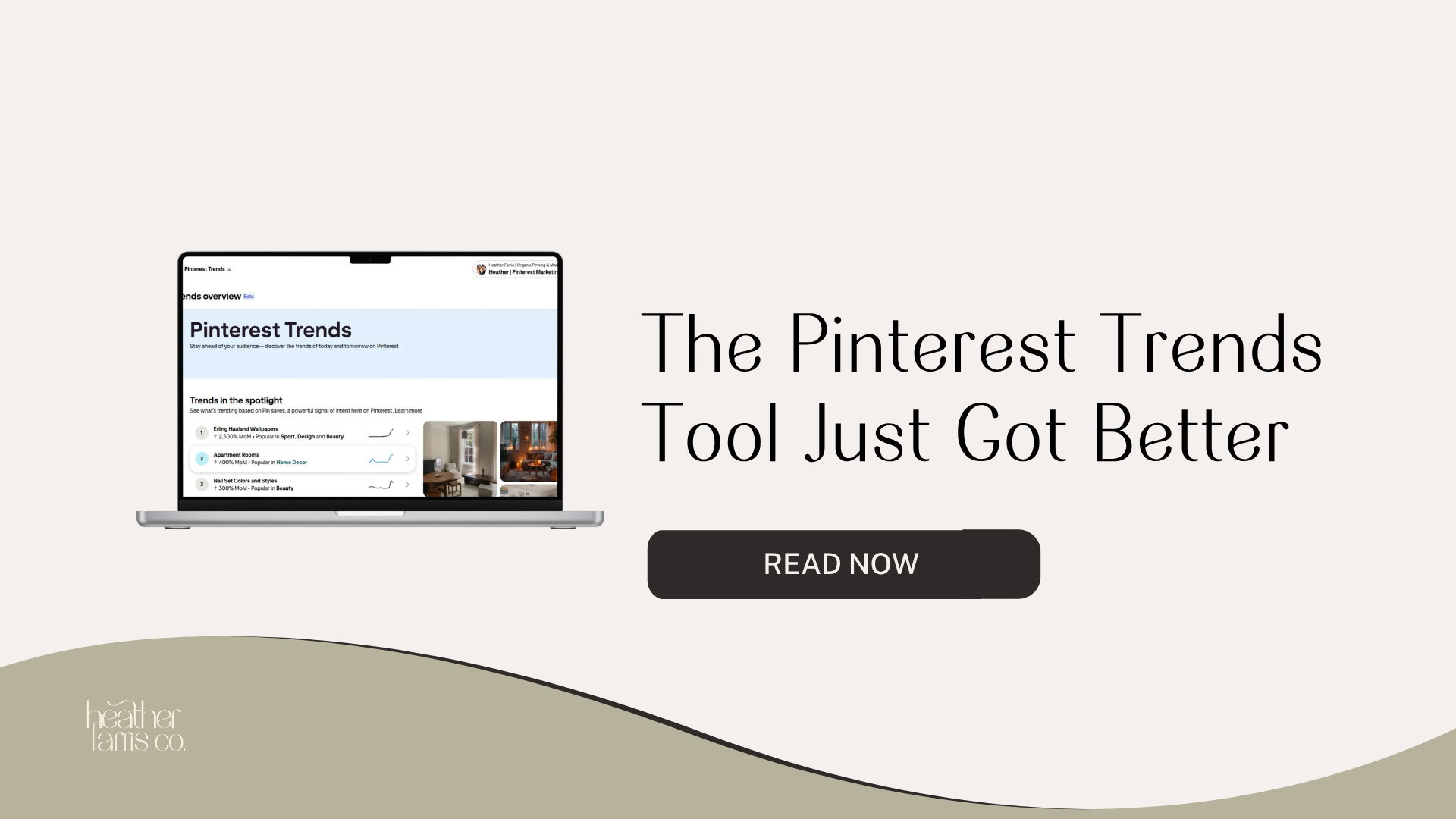
Go to trends.pinterest.com to access the entire tool. At first glance, you’ll see it is laid out in a slightly new way than previous. You’re going to see:
- Super popular trends spotlight above the fold
- Filter all trends by interests and their data
- Upper right drop down for regions across the world
- Search trends people are searching for
- Shopping trends for products and shops
The newest addition is the Shopping Trends. If you scroll down a little, you’ll see that with the search area. Or you can select them from the icons on the left.

RELATED: Pinterest Trends: How to Use This Keyword Tool for Content Planning
New shopping trends section
This section is amazing for product sellers. You can filter and search through clicks, engagement, and saves for any product categories. It’s even specific to gender and age demographics. This is such good information for us to know and we didn’t have this before.
If you service a general niche, you can adjust the top vertical to fashion, home decor, or beauty and see all of the products within those that are trending high.
RELATED: Pinterest For E-Commerce: Pinning Tactics for Product Sellers
All categories keywords data
I also did want to show you where you can find highly suggested keywords based on specific product categories. If you click ‘All categories’, then select whatever product category you prefer, say ‘Beauty’, then ‘Beauty supplements’.
Scroll down and you’ll see all the products and their data. But specifically, toward the bottom there’s common keyword search terms linked to the data you can copy directly. You can use these in your deeper trends research, ad placements, board optimizing, and inside of your pin descriptions.

Time periods to remember
I want you to remember that this information is going to change over time. Pay attention to the time ranges the data is specific to. The default is 30 days. Your trends and keyword research is never one and done. Circle back monthly, or the very least quarterly.
There are your seasonal trends that come back around every year. There are unexpected trends that happen sporadically and Pinterest Predicts can help with that. But you don’t have to wait a whole year to do your research and get ahead of the curve.
RELATED: Pinterest Holiday Marketing Strategy That Works Year After Year
Search trends section overview
Now, let’s move along to the search trends tool. This is the tool that everyone should be the most familiar with. It got the least amount of updates, but it is a bit better than before. Mostly just the look and feel of the tool. But not major functionality differences. But there’s one thing I wanted to show you.

Automatically, based on your account, it’s going to filter to interests, categories and keywords that your account is tied to. For example, I am in the marketing space. There’s no technical business category for Pinterest trends, so a lot of my ads and everything fall into this ‘Design’ category.
So my Search trends automatically ticks for that. If you uncheck it, you can definitely search all of the trends without having to be inside of a specific interest category. But this is helpful to see trending data for searches in your area that you may not have thought of but are possibly relevant.
You can also click ‘Include keywords’ and add whatever topics you want to see how they compare within the same chart. Same filters and data, but you can specify which keywords you want shown.
RELATED: How Pinners Discover New Content on Pinterest
How to use Pinterest trends ahead of the curve
Not a lot of people know how to use Pinterest trends the right way when it comes to timing. You have to jump on the trend at the right time in order to gain traction with it. Number one is the advice I’ve given for years, and that is to look at your trending keywords, your audience trends, and be creating pins for those 90 days in advance. This allows Pinterest to index the content for you and get it in front of the right audience at the right time, but ONLY if you are pinning that content 90 days or more in advance.
Keyword clusters and future predictions
In the Pinterest trends tool itself, if you noticed in the Search trends after clicking into a specific term, there are two things I want to point out.
- Future predictions
- Related trends
If you click on any keyword to look at its specific data, and there’s a button on the upper right, ‘Predict the future’. Click that and you’ll see prediction trend data for a few months moving forward. So that’s awesome because you can gauge if the keywords may be possibly growing or dying.

I know most people go straight for their main keywords, but I would also find sub keywords that are related. So many search terms can be reworded or are similar and can be used just as often as your primary keywords.
Now, if you scroll down, there is a related keywords section that also has trending keywords. That is what I like to call keyword clustering: taking those related keywords that are related to your main keyword and using those too.
- in your pin descriptions
- the text overlay on your pin images
- pin titles
Cluster your keywords together naturally, not just messy keyword stuffing. This way you’re more likely to rank for, say, five keywords instead of just one, on just a single pin. That’s five additional opportunities to be shown to your audience because you did a little research.
RELATED: 6 Places to Use Keywords to Optimize Your Pinterest Profile
Strong keywords on your boards
If you have a keyword that is showing up in the trends tool that is integral to your business, one of your major categories that you publish content on, use it more. That keyword deserves its own board.
- board title
- in the board description with other related keywords
- text overlay for your board cover
- the cover pin title
- cover pin description
RELATED: The Ultimate Guide to Create Your Pinterest Board Strategy

Find Keywords You Can Actually Rank For
You will walk away from this training understanding how to actually find keywords & content you can rank for based on your business & audience.
When you can’t find your keywords
People often ask me, “Hey, Heather, I’m not finding any keywords related to my topic in the trends tool. My topic must not be covered by Pinterest. There must not be enough volume for the keyword for it to not show in the Pinterest trends tool.”
This happens if your topic isn’t a higher volume of everything on the platform. In that case, I would default to the search bar on Pinterest and just validate that your keywords are being searched for there. If you can find your keywords in the search bar, in the auto suggest section, your topic is being searched.
If you can find lots of pins related to your content in search results, then your content is being searched for and categorized by Pinterest. It took me 7 years before my business keywords started showing up in the trends tool. So don’t fret if they don’t show up for you. That does not mean that people are still not searching for them on the platform.
Final thoughts on how to use Pinterest trends
If you put these tactics into action, you’ll start turning trend signals into real growth: increased saves and outbound clicks, driving more targeted traffic and conversions. Using keyword clusters and demographic filters cuts wasted effort and makes each pin work harder for you, so your content reaches the right people at the right time.
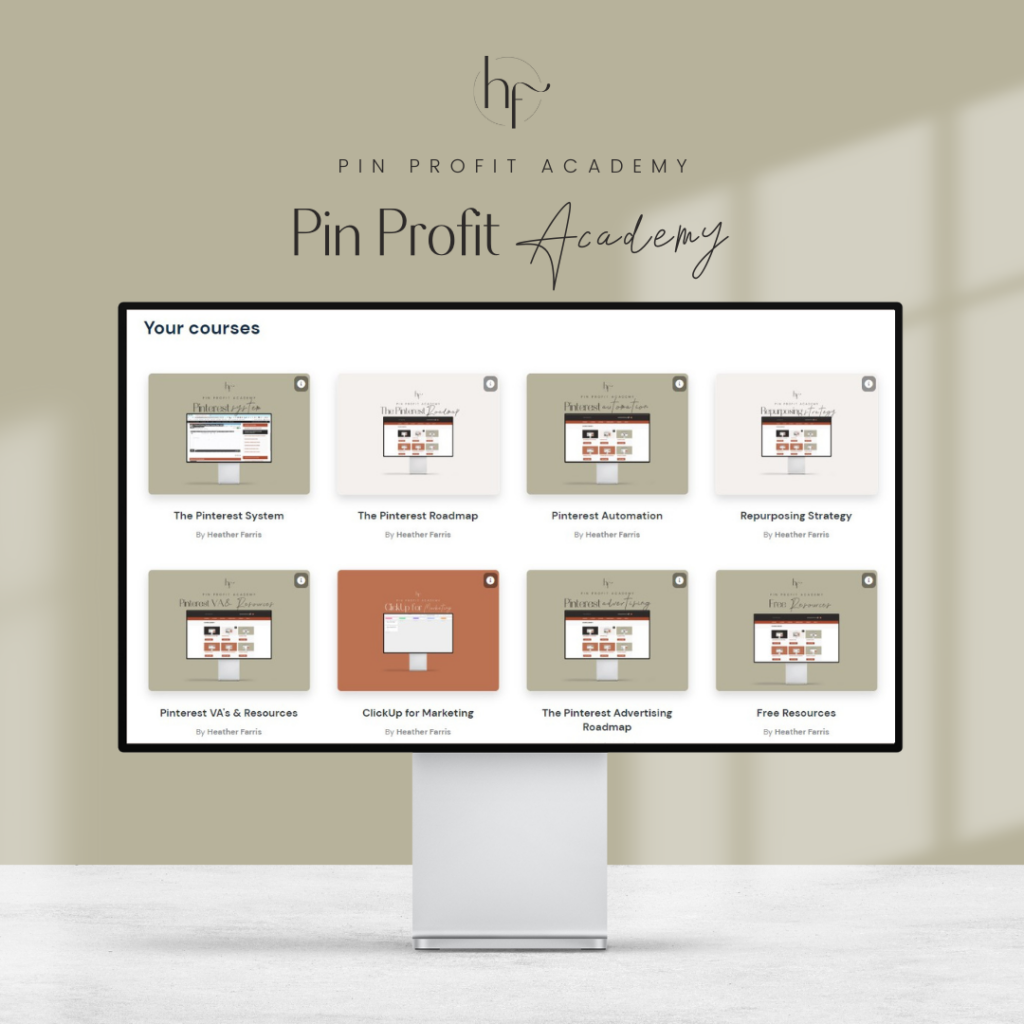
If you’d like help implementing next steps for every facet of your small business Pinterest market plan, join us in Pin Profit Academy. Inside you’ll receive every system and process needed to keep your venture running smooth with Pinterest. See you inside!
Pin Profit Academy
Marketing can be difficult and trying to figure it out on your own, especially with Pinterest, can be overwhelming.
I will show you how to double your traffic and sales without spending another minute on social media!
PPA is the only comprehensive membership program & community for creating, marketing & selling your products & services using Pinterest.
Pin it for later


Heather Farris went to school for accounting and worked for years in banking and finance. After finding all of that entirely too boring she started her first blog in her basement in August of 2016. She has started 3 blogs in the marketing, motherhood and travel niches and used Pinterest to grow them all. She quickly became the go-to Pinterest strategist in her peer circles and has been implementing strategies, driving traffic and sales through organic and paid tactics for her clients. On this blog and her YouTube channel, as a renowned Pinterest marketing expert, she educates the public about clear and transparent marketing strategies to help them to grow on Pinterest and in other places online. She created Pin Profit Academy and helps small business owners just like you to master their Pinterest marketing strategy. Heather is now a Pinterest Educator, one of the very few sponsored by Pinterest.