

How to Create a Pinterest Strategy for Travel Bloggers
You have a travel blog and you’re looking to use Pinterest to seriously build another traffic platform. This could very well be the place for you. Today we’re going to cover how to create a Pinterest strategy for travel bloggers.
Today’s post has a few goals. We’re going to go through:
- The different pillars of your content strategy and how they work with your Pinterest strategy.
- Help you build a Pinterest strategy that’s going to help deliver traffic.
I’m even incorporating content strategy that includes affiliate marketing. So if you’re promoting travel brands or gear, this will be a good fit for you.
RELATED: The Complete Pinterest Marketing Strategy I Tell My Friends in 2026
Keywords in Pinterest strategy for travel bloggers
Let’s first talk about your keyword strategy, it is a huge part of a successful Pinterest strategy for travel bloggers. I have some keyword categories—just sample ones—that you can start to expand on. I have more of these inside of my Keyword Bank, if that interests you, but these are a few examples from that same resource.
Keyword category examples for your niche include:
- destination guides
- seasonal travel
- travel planning
- travel budgeting
- luxury travel.
Every set of keywords comes with the viewer’s intent—what phase someone might be in, related to these keywords—and we can create ideal board themes around each.
When creating a Pinterest strategy, everything starts with keywords. From your keyword strategy, develop your board strategy for your profile. Then, develop your content strategy for your Pinterest pins.
Keywords —> Boards —> Content (pins) = Pinterest Strategy
It might feel overwhelming, wondering how many boards or pins to create, but start by focusing on what keywords you need first. Use those keywords to create boards, then create pins for those boards. Don’t worry, because we’re walking through this.
RELATED: Pinterest Tasks Not Worth Your Time + What to Do Instead
Keywords from your existing content
Instead of trying to plan every possible board you’ll ever need, start with the categories of content that you already have on your blog. Do a small audit of your own website. What categories do you cover on your travel blog? Those will become the pillars that you use to create your initial Pinterest keyword strategy and boards. No need to start from scratch.
Your content keywords could include destinations broken down by country, city, state, or province. You could include trip types, like:
- solo trips
- family trips
- train trips
- RV trips
- road trips
- budget trips
- hiking trips
- boat trips
- camping trips
- seasonal trips
Another keyword bucket is travel tips:
- how to pack
- how to prepare
- how to travel with kids
- how to handle mishaps when things don’t go right
- how to take great photos during different seasons
RELATED: 7 Ways to Generate Content Ideas Even When You’re Not Feeling Creative
Finding keywords from content and free tools
Each blog post you create should have a series of Pinterest pins. Each pin should get a series of Pinterest keywords. Basically, each blog post pin gets a keyword cluster, which you’ll use in your title, description, and text overlay. That’s where you use them, but where do you find them?
When finding keywords, you don’t have to pay third-party tools to get quality keywords with data behind them. A lot of people overlook the built-in tools that Pinterest provides for free.
- The Pinterest search bar.
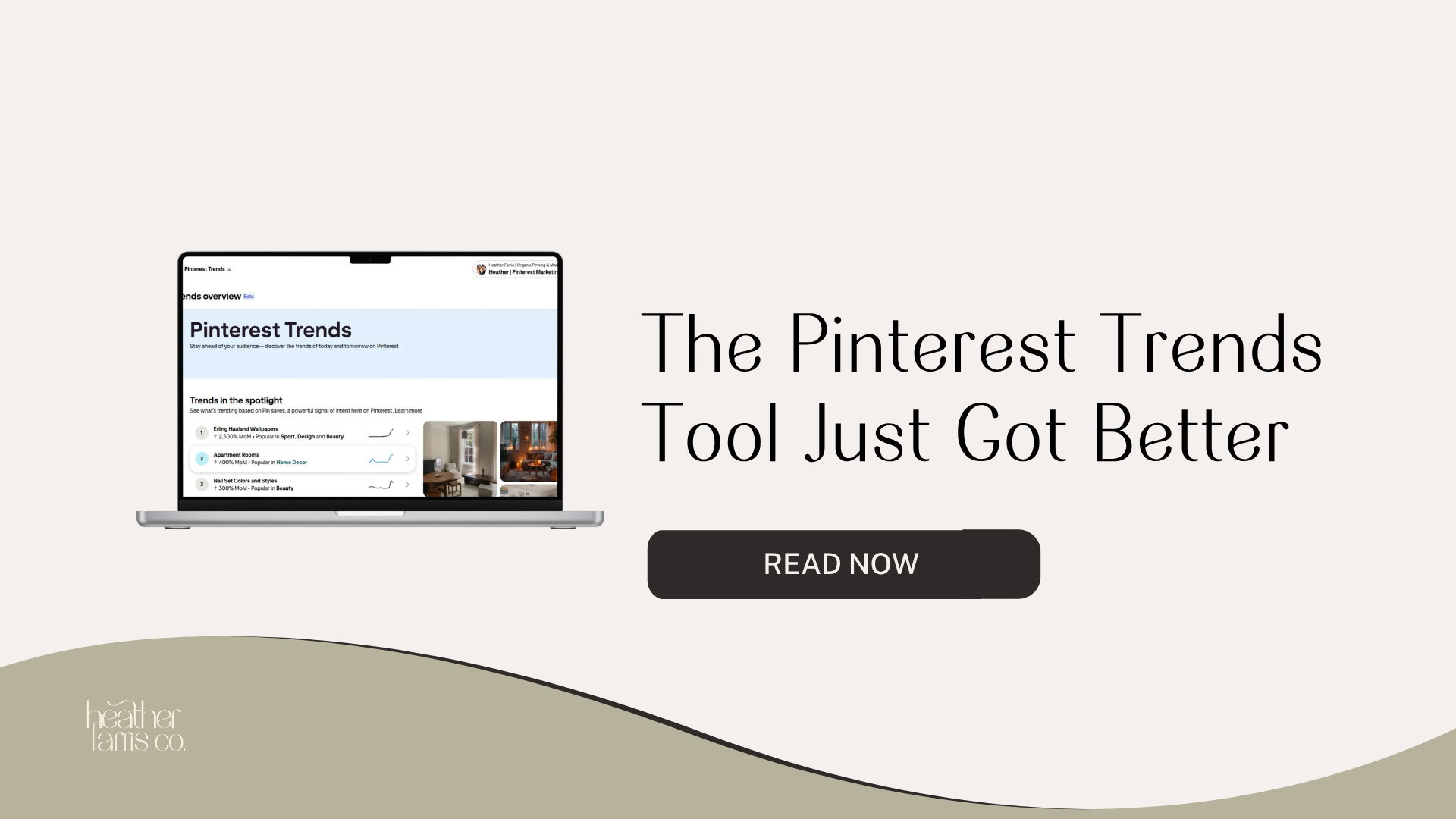
- The Pinterest Trends tool.
- The Ads Manager keyword research tool.
RELATED: Pinterest Predicts: Must Have Marketing Plan Trends
Using Pinterest trends for great keywords
Using the trends tools is fantastic for a Pinterest strategy for travel bloggers. A major tip: Be sure to pay attention to ‘Regions’ when using the trends tool. Travel creators often have audiences globally, so adjust the data settings depending on what you’re creating and researching for.
If you’re posting “10 tips for car camping with your kids,” those tips may be useful in both Australia and the U.S. Even though the weather and seasons differ, the fundamentals are similar.
Use the trends tool’s region filter in the top right corner. Choose your region and make sure the phrasing of your keywords fits regional language. For example, Americans say “vacation,” while many other countries say “holiday.” You’ll even see this in Pinterest searches: “vacation” tends to dominate U.S. results, while “holiday” dominates in Nordic countries. So, tailor your keywords based on region and audience language.

RELATED: How to use Pinterest Trends with the New Updates
Content in Pinterest strategy for travel bloggers
Let’s move into content strategy before we talk about board strategy. All your Pinterest keywords will map to both board strategy and content strategy. Your board topics correspond directly to your content topics. Your main content pillars might include destination guides, seasonal travel, travel types, and travel tips.
Every time you publish a new blog post, create 10–12 pins immediately. I tend to lean toward 12 because that gives me about three months’ worth of content from one post. Each pin gets its own title and description and uses a mix of related keywords. If seasons shift (for example, summer to fall), schedule pins with appropriate seasonal keywords within that timeframe.
Here’s a suggested content breakdown for each post:
- Evergreen keywords: 4–6 pins
- Seasonal or trending keywords: 3–5 pins
- Affiliate pins: around 4 pins for products you promote
- Inspirational or repurposed content (like Instagram reels): 2–3 pins
RELATED: How to Create Pins for Pinterest in Canva: An Image Workflow to Save Time
Creating and scheduling pins as a travel blogger
Batch your Pinterest pins and schedule them out over time, up to 90 days. After that, evaluate whether the season has changed or if you can reuse the same keyword set for a new batch. As you create Pinterest pins for each blog post, mix your keyword and content pillars: destinations, seasonal travel, trip types, and travel tips.
For example, from one destination guide blog post, create pins about:
- where you stayed
- what you ate
- what you did
- how you got around
Mix images and videos if possible. You can use Canva’s stock video library or your own short clips of travel scenes (leaves, flowers, water, animals, etc.) as background visuals.
Mix pins with and without text overlays. Videos can also be used with or without text. Use a combination of top-, middle-, and bottom-funnel keywords. Bottom-funnel ones will often pair with affiliate links.
RELATED: How to Bulk Schedule Pins on Pinterest for FREE
Boards for Pinterest strategy for travel bloggers
Board strategy is the most underrated part of the Pinterest strategy for travel bloggers. Board strategy is also based on your keyword strategy. Create boards for the content you already have and build from there.
As soon as you start working in Pinterest and exploring keywords, you’ll get new ideas for ways to expand content into new boards and pins. You can organize boards by destination, trip type, tips, or other themes. For example, you can have separate boards like:
- Italy Travel
- Netherlands Travel
- Europe Travel
- Budget Travel Tips
- Luxury Escapes
- Family Travel
- Summer Travel Inspiration
- Winter Travel Inspiration
Use exact keyword phrases found in the Trends tool for your board titles. You can make them longer by specifying “for whom”, or “for what purpose.” For example, instead of just “Packing Lists,” use “Packing Lists for Solo Travelers” or “Packing Lists for Summer in Italy.”
Have a mix of evergreen and seasonal boards. It’s okay if some boards sit idle for a season. However, keep in mind that Southern Hemisphere travelers search for summer content during the Northern Hemisphere’s winter—so you can continue pinning to capture that audience.
If you only have one blog post on a topic (say, “Netherlands Travel”), you might not need a separate board yet. Once you have three or more posts, it’s worth creating one.
RELATED: The Ultimate Guide to Create Your Pinterest Board Strategy
Pinterest publishing workflow and organization
Now let’s talk about workflow. Aim to publish three to five pins per day. If you can only do one, that’s fine. One a day bare minimum is much better than one a month. The more content you put out consistently, the faster Pinterest’s algorithm serves your pins to your audience.
You can use Pinterest’s native scheduler or a third-party tool like Tailwind, Later, Buffer, Metricool, or RecurPost. Pinterest’s built-in scheduler lets you schedule up to 100 pins at a time and up to 30 days ahead. If you want to schedule all 12 pins from a new post, a scheduling tool is worth considering.
Develop workflows for creating both your pin designs and your pin copy. Tools like the PinBot can help you generate pin copy using your keyword lists and business information.

The Pin Bot for ChatGPT — Your Pinterest Marketing Sidekick
Stop spending hours writing pin descriptions, SEO blogs, or brainstorming your Pinterest strategy.
The Pin Bot for ChatGPT is your ready-to-use Pinterest marketing assistant, pre-loaded with proven templates so you can create, plan, and optimize content in minutes.
In Canva, organization is key. Create a folder for your travel blog, with subfolders for each blog post. Inside each post folder, keep all relevant photos, videos, and designs. You can even add Pinterest-specific image sizes to your designs.
I also keep a folder of brand templates and other recurring assets to quickly make new pins. Being organized means you can produce pins faster and more consistently.
RELATED: I Tested Pinterest Approved Schedulers So You Don’t Have To
Analytics and tracking your data
Let’s briefly talk about analytics. The key Pinterest metrics you should track are:
- Impressions
- Pin clicks
- Saves
- Outbound clicks
- Top pins
- Top boards
When analyzing your top pins, look deeper: which keywords, topics, or categories appear repeatedly? Are there trends within your best-performing content? Use that data to create new boards, new content, or refresh your strategy.
If you don’t have a system to track everything, I have a Pinterest System available that lets you monitor when you pinned last, and manage all your content in one place.

The Pinterest System
Speed up your client management processes and personal Pinterest marketing strategy with every content workflow and tracking system you need.
Track and manage your content, links, data analytics, keyword research and more! No more wasted time in your product or service business because you’ll have everything you need.
Track data monthly or quarterly. Monthly helps you make small course corrections, while quarterly gives you a big-picture view. Ask yourself: do you need new pin types, keyword categories, or boards? What topics are emerging over the next 90 days?
Pinterest provides so much help for free. Use it.
RELATED: Pinterest Analytics: What to Do With Your Pinterest Data
Final thoughts on how to create a Pinterest strategy for travel bloggers
That’s your entire Pinterest strategy for your travel blog. It’s a lot, but it gives you a solid place to start. Building a Pinterest strategy for travel bloggers doesn’t have to feel complicated. By focusing on:
- smart keyword research
- organized boards
- consistent pin creation
You can turn Pinterest into a steady source of qualified traffic for your travel blog. The strategies I shared are designed to help you work efficiently, repurpose your existing content, and attract readers who are genuinely interested in your travel stories and tips.
With a thoughtful approach to Pinterest marketing, you’ll not only boost visibility but also create a sustainable system that supports your long-term blogging goals. Whether you’re promoting destinations, sharing packing tips, or recommending travel gear, your Pinterest presence can become one of the most powerful drivers of growth and engagement for your brand.
Pin it for later


Heather Farris went to school for accounting and worked for years in banking and finance. After finding all of that entirely too boring she started her first blog in her basement in August of 2016. She has started 3 blogs in the marketing, motherhood and travel niches and used Pinterest to grow them all. She quickly became the go-to Pinterest strategist in her peer circles and has been implementing strategies, driving traffic and sales through organic and paid tactics for her clients. On this blog and her YouTube channel, as a renowned Pinterest marketing expert, she educates the public about clear and transparent marketing strategies to help them to grow on Pinterest and in other places online. She created Pin Profit Academy and helps small business owners just like you to master their Pinterest marketing strategy. Heather is now a Pinterest Educator, one of the very few sponsored by Pinterest.