

How to Sell on Pinterest: Full Ecommerce Strategy for Your Shop
If you run an e-commerce shop, then you may be looking to sell on Pinterest. I highly recommend you do; you’re in the right place.
A lot of e-commerce shop owners think that marketing on Pinterest means only making product pins, or putting some product imagery on their Pinterest profile. But pins are really only part of the overall e-commerce Pinterest strategy.
Your Pinterest marketing strategy should include a lot of things, not just product pins. We’re going to cover areas that include these things and how you can build a successful full ecommerce strategy for Pinterest.
- Keyword research, SEO
- Trend awareness and application
- Keyword optimization on pins and boards
- Board strategy and structure
- All different types of pins
- Publishing workflow
- Account and audience analytics
I want to break down each of these into a framework that you can follow. All of this is foundational. If you do these things, you should get reach on the platform. You should see clicks and traffic.
How Pinterest works for your ecommerce store
I want you to remember, Pinterest is the car to get people to your store, not the actual store. Pinterest is the Uber taking them to your store. To sell on Pinterest, you’re using it as a way to get your buyer to what they want.
Pinterest is not the conversion mechanism and it cannot convert your product into sales for you. That is the entire job of your shop. So if your site is not converting already, Pinterest traffic is probably not going to fix that for you. You’ll want to fix that problem before you invest heavily into any marketing platform.
RELATED: Why You Need a Content Strategy Before You Ever Begin Marketing
What actually drives visibility on Pinterest
Then what actually matters in a Pinterest marketing strategy if you’re an e-commerce shop owner? Before we talk about boards and pins, we need to talk about what drives visibility on Pinterest and what Pinterest is not.
Pinterest is not social media, it is a search engine. But beyond something like Google, It’s also a massive discovery platform, especially with shopping lately too. So visibility comes from search and engagement.
Just like every other platform, Pinterest has an engagement algorithm and they will serve your content to pinners based on:
- What you’re creating
- Viewer interests in things you create
- How your boards are indexed.
- How pins are optimized and tagged
- Behavior of the pinner on the platform
The main two buckets here are engagement and search. If either of those pieces are missing, or if you aren’t consistently publishing and optimizing, going to sell on Pinterest is not really going to work out for you in the end.
RELATED: How Pinners Discover New Content on Pinterest

The Pin Bot for ChatGPT — Your Pinterest Marketing Sidekick
Stop spending hours writing pin descriptions, SEO blogs, or brainstorming your Pinterest strategy.
The Pin Bot for ChatGPT is your ready-to-use Pinterest marketing assistant, pre-loaded with proven templates so you can create, plan, and optimize content in minutes.
Start to sell on Pinterest with keywords
Let’s dive into each of these Pinterest strategy foundational components. Let’s start first with keywords and trends.
Keywords on Pinterest are similar, but not the same as keywords on Google. Keywords on Pinterest can be categorized into three types, and I relate them to your sales funnel. They are keywords to apply to:
- Top of funnel awareness
- Middle of funnel consideration
- Bottom of funnel purchase
Pinterest users are experiencing every level of engagement and purchase considerations in these areas on Pinterest, versus just clicking once and leaving like a results page of Google. The keywords in these areas that you use for your pins should also be used for your boards as well, and we’ll get into that later.
RELATED: How to Use Keywords to Optimize Your Pins on Pinterest
Enhancing keywords and content with Pinterest trends
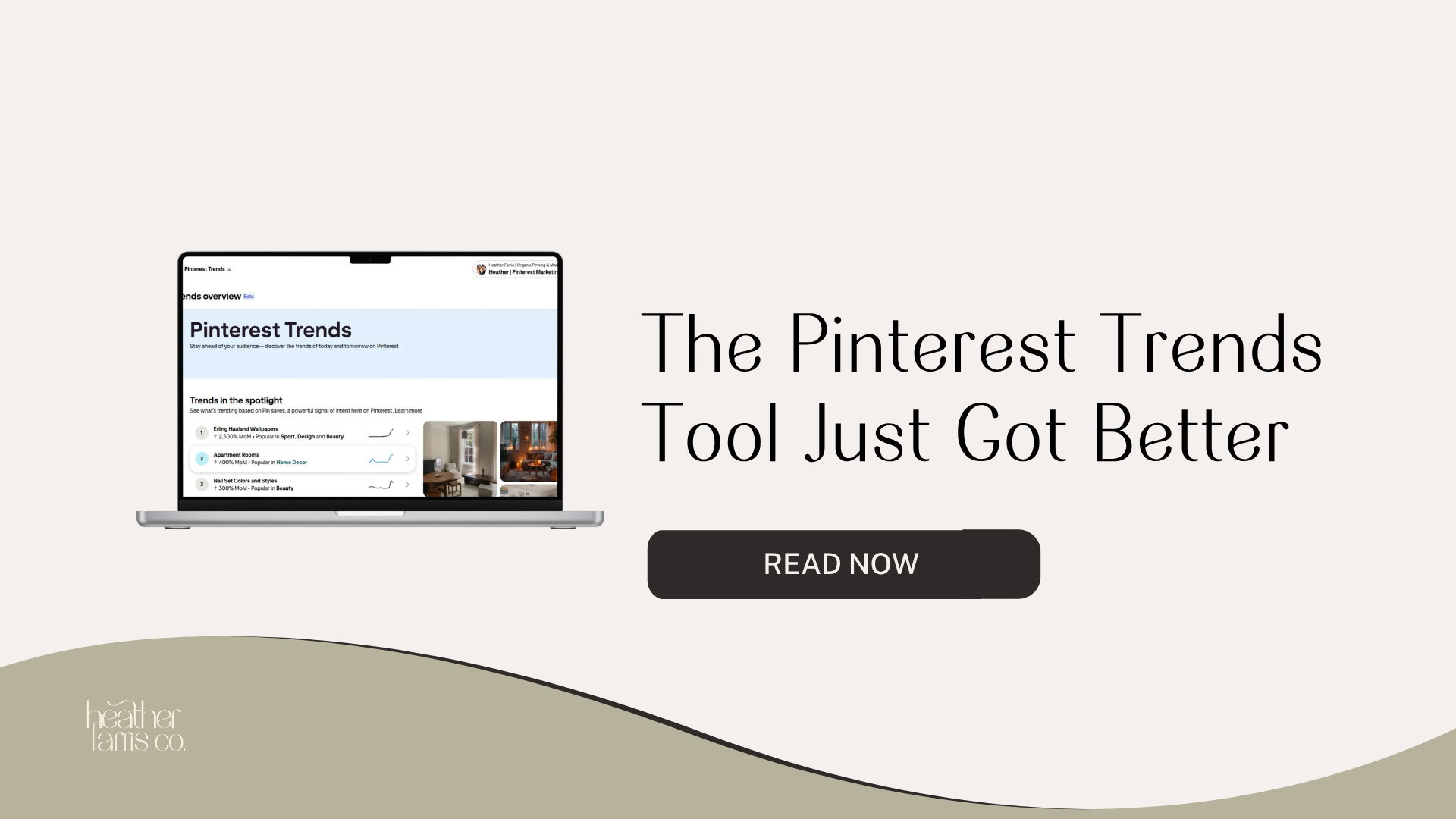
Pinterest Trends are similar, but not the same as Google Trends. It’s going to tell you the popularity of any given topic or trend on Pinterest throughout the year. There are filters by which you can look through growing, monthly, seasonal, and yearly times for all categories.
They also have trends based exclusively on searches and also shopping. Your Pinterest trending keywords should be prioritized and used as keywords on your pins and your boards. You can plan content months in advance based on trends, and ride the wave of when they peak, because the surge of engagement happens long before.
RELATED: How to use Pinterest Trends with the New Updates
Example: candle brand keyword ideas
One of my friends is starting a candle company, we’re going to use this as an example. For starters in keyword research here, from a search, the keywords I found were like:
- fall candle scents
- cozy home decor
- best gifts candles
- best candle gifts
- self-care nightly routine
Those are great, but it’s just a starter list. It’s not super niched in on the candle brand itself, but it’s parallel to the candle brand.
Fall searches might start in early summer. Holiday searches will start in late summer, early fall. Specific gift searches depend on the holiday and could start weeks, if not months in advance. If I’m making a ritual around lighting a candle for my self-care routine come New Year’s resolutions, then targeting that would be around November.
It really matters in context when we’re talking about our keyword strategy, that we’re timing things right with the seasons and trends, and layering those in the right way.
RELATED: Pinterest Trends: How to Use This Keyword Tool for Content Planning
Boards based on ecommerce products
We talked about keywords. Next you’re going to find a list of keywords that are related solely to the categories of products on your website. That’s where the boards come in. The boards are actually birthed from what you sell on your website.
That’s the simplest and easiest approach to getting started. You don’t need to start with 60 boards. You only need to have one board for each category of products. Boards are one of the most misunderstood parts of Pinterest. This is where people will create boards that are nonsensical; we’re not going to do that.
Most brands treat boards like a folder. But if you picked up a folder anywhere in my house, you could open that up and it probably would everything regarding a single project:
- Artwork
- School work
- Home project ideas
- Fabric scraps
- Schedules
- Holiday cards
That is not what we want to do with our Pinterest boards. Boards on Pinterest serve more as topic signals and indexing filters for your pins. This way your content is categorized and served up correctly.
RELATED: The Ultimate Guide to Create Your Pinterest Board Strategy
Board strategy is for optimization
This is what you’re going to do with your boards instead. Boards are going to help Pinterest understand:
- What your account is about
- Topics you are creating pins for
- The audience you serve
- Types of content that belong to you
- What you need to be known for
They help Pinterest index your content and ultimately serve it to those audiences. If your website categories are not well optimized, then you’re probably going to have trouble creating your boards on Pinterest too.
Each board represents a topic that your customer is already searching for. That is where Pinterest sees the consistent content within that board and the consistent pins being published. That makes Pinterest serve your audience when they are looking from your own content and get your pins to the right people.
RELATED: 6 Places to Use Keywords to Optimize Your Pinterest Profile
Example: naming candle brand boards
Instead of naming boards like our internal products (“my store name” candles), let’s flip it and turn our boards into searchable topics. Do things like:
- Fall candle scents
- Cozy home decor
- Self-care nightly routines
- Minimalist home decor
- Natural candle scents
- Housewarming gift ideas
These are more broad, but they’re searchable. If you want to get even more distinctive and niche down into the features of your candle brand, you could do things like ‘natural beeswax candles’. What material are you using for your product? Make a board around that.
RELATED: Pinterest Board Covers for Better Conversions on Your Profile
Pin content strategy to sell on Pinterest
Let’s move on to the actual pin strategy itself because this is where most people spend the majority of their time. But too many people also treat it like throwing spaghetti against the wall.
Pins are the most visible part of your Pinterest strategy because that is what people are clicking on to go to your website and see your products. They are not the whole strategy, but they are necessary for your Pinterest marketing strategy.
We are going to talk about three types of content (pins) and why e-commerce brands should create those three types of content, no matter what you sell. Product pins are not the only type of pin that you should create. You should be creating all three:
- Discovery pins
- Consideration pins
- Product pins
All three buckets are important to the overall process in the Pinterest strategy. Pinterest users are in an idea or planning phase to start. However, they will go through your full funnel and ultimately purchase, all still while being on the platform.
RELATED: 3 Types of Pinterest Content For Your Marketing Strategy
Complete content ideas as an ecommerce shop owner
Within those three phases, your pins aren’t just telling viewers to “buy” or “show now’. You need to have support for all areas of your customer’s journey and their progress down the funnel. Your content should also include:
- Inspiration for having your product
- Education about your product
- Tutorials on how to use it
- Ways to store and preserve it
- How to care for it while using it
There is no hard mix of what percentage of content that you should do, straight up product pins versus education, etc.. There is no 70-30 rule or 50-30-20 rule. Just publish a variety. Try things out. See what works, and then do more of what works.
RELATED: How to Use Curated Content on Pinterest
Discovery pins
For our candle brand, here are two examples of discovery type pins. One is ‘cozy evening routine ideas’. You can put this on your self-care routine board, and link it to a blog post about how to create that cozy routine. You then incorporate your product into the blog post, whether to your own shop or as an affiliate.
The second example is ‘minimalist home decor inspiration for fall’. There are several different keywords used on the design of this pin, another one as ‘simple and cozy fall decor’. This would link to a blog post because pinners who are engaging with this kind of content are high up at the start of their journey, in the awareness phase.
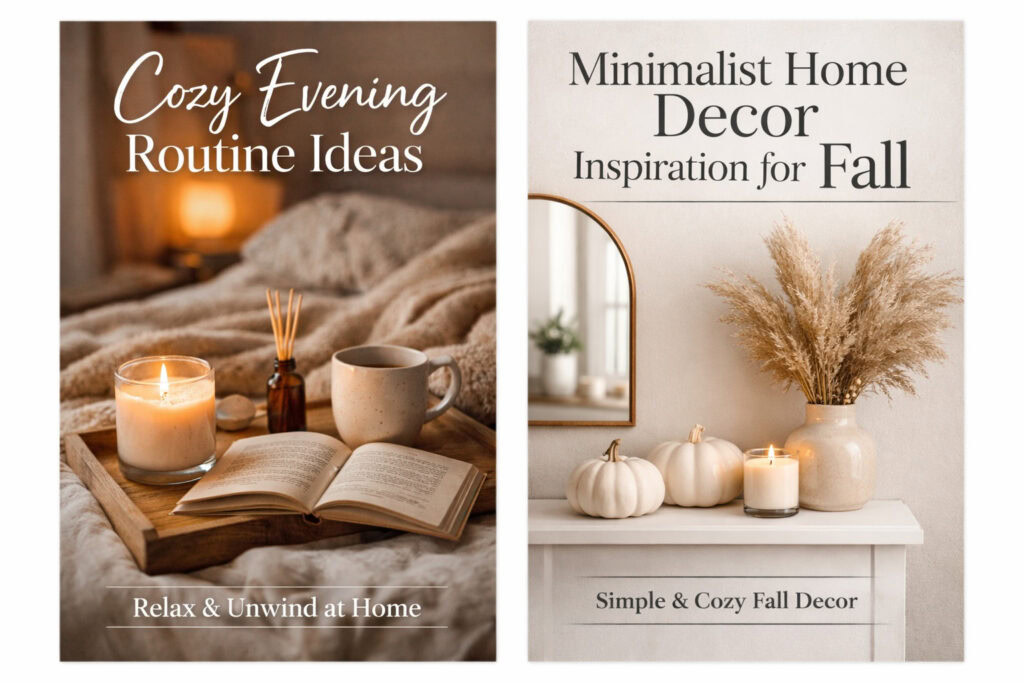
These pins might get impressions and saves, they may even get traffic to the website. but they are probably not going to result in a ton of sales right away. They’re for discovery, introducing your brand to viewers, and getting things circulating into their feed.
That is okay because with these pins, their job is not sales alone. Not every pin has the same end goal of getting a sale. But they all lead down the same path.
RELATED: What are the Different Types of Pins on Pinterest? (+ When to Use Each)
Consideration pins
The next example is consideration pins. This is the phase in the customer journey where they are choosing between ideas. This could also be brand versus brand or product versus product, such as beeswax versus soy wax.
They’ve done some research, are more familiar with options, and now are trying to nail down exactly what option they’d prefer and try to find it. So our candle pin example is ‘cozy bedroom aesthetic ideas’, or ‘fall living room decor ideas’. Both of these are providing multiple things to choose from.
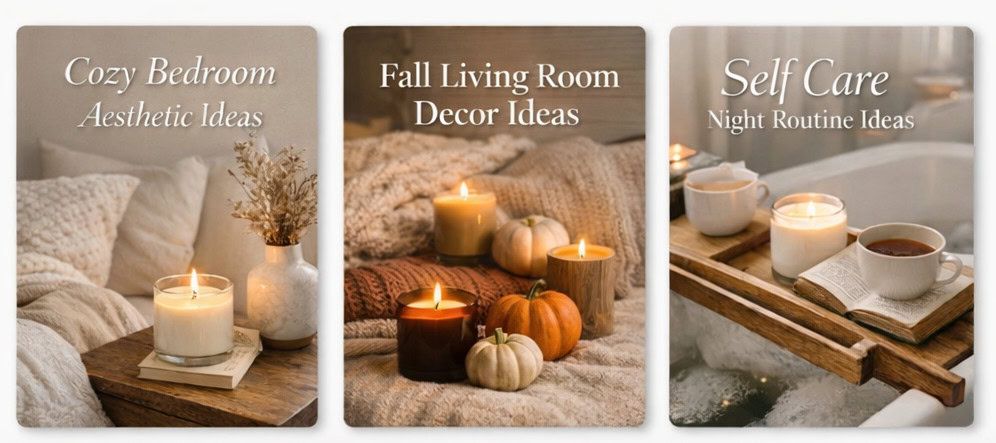
This content could link to a blog post, a sales page, category page, or a product page, depending on how the content is presented. These probably will not generate a ton of instant sales, but they will generate traffic to the website where they start to see the products available and know where to find them.
These pins are getting saves and higher click throughs because your customer is serious now about what they’re looking for. And they don’t want to forget the ideas or options you’ve presented to them.
RELATED: How to Create Pins for Pinterest in Canva: An Image Workflow to Save Time
Product pins
The last examples are product pins. These are meant to sell and could also be used for ads. Your products should be the main focus of your pins for this part of your Pinterest strategy. You can see the difference in the pin types, the content focus, and the journey from awareness to purchase now.
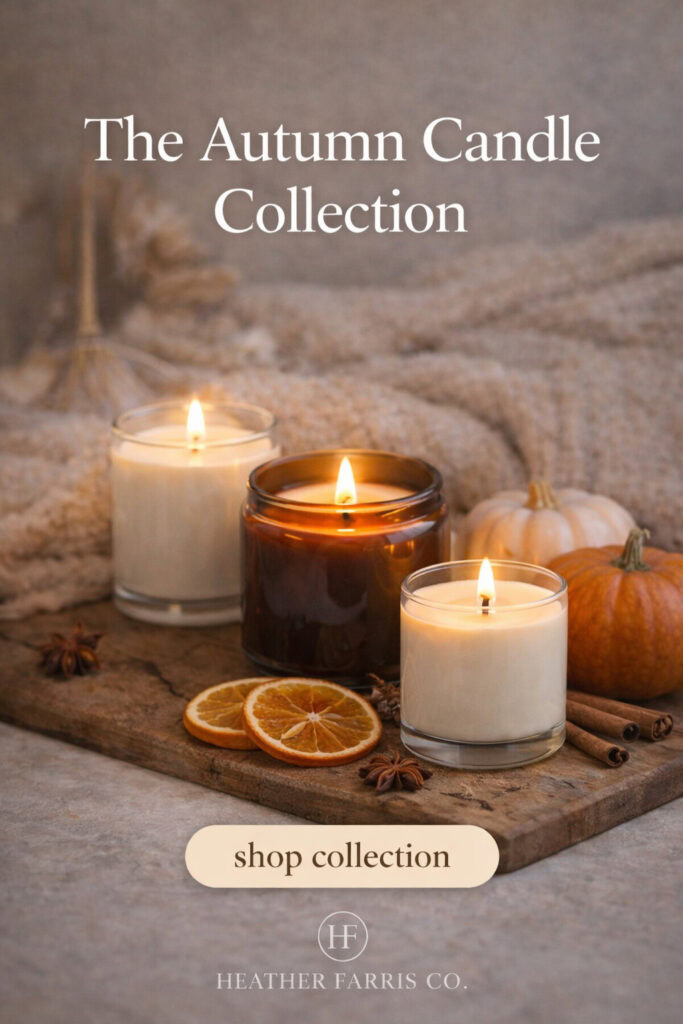
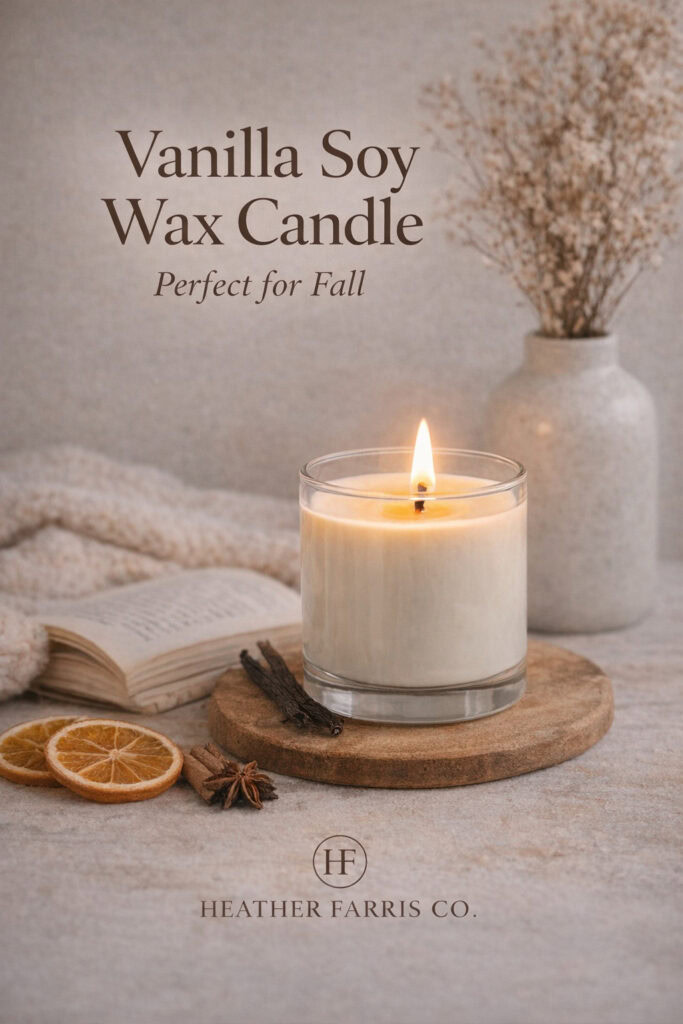
The ‘autumn candle collection’ pin includes a call to action to shop the collection. The ‘vanilla soy wax candle’ pin showcases the product and highlights that it is perfect for fall. Those are your product pins.
RELATED: How to Make Pinterest Product Pins that Convert
Creative assets for your pin designs
The creative assets that you use should include not only your white background photos, but lifestyle imagery as well. People want to see your products in the space where they are going to be consumed, used, and enjoyed. Make sure you are creating lifestyle photos or at least mockups.
If you do not have the ability or budget to photograph it yourself, you can use AI tools to support you. Product photography and videography should showcase how the product moves. Showcase all sides of it and details. Those things are important.
RELATED: Make the Most Pinterest with The Pin Bot for ChatGPT (A Pinterest AI ChatBot)
Unique pin types to also consider
You also want to create educational type graphics. You could create infographics that compare this wax versus this wax, this fabric versus leather, or whatever it is that you sell. Infographic style pins drive education and saves on the platform.
You also want to create video pins. Showcase your product in a way that people can see how it behaves, how it moves, and how it flexes or compares to other common options.
I recently bought a purse from a popular leather company. It is a round leather purse and it is super cute, but it always collapses in. If I would have known that, I probably would not have bought that particular bag. There were no videos for me to see how the bag behaved with someone actually using it. It is on me for not doing my homework, but it is also on the brand for not providing that resource for people to see how the product behaves.
Creative assets are important, but keywords and boards are foundational to your success on Pinterest. Without the research and detailed optimization, it doesn’t matter how branded or uniquely designed your creatives are.
RELATED: How to Make Pinterest Video Pins in 3 Easy Ways (No Filming or AI)
Ecommerce Pinterest strategy workflow
Let’s talk about the last thing essential to sell on Pinterest well, and that is a strategic workflow. A Pinterest strategy is not a complete strategy without having supported consistency. The consistency comes from having a workflow setup to support your creative systems in making your Pinterest marketing happen.
A workflow can be simple, even broken down by weeks in your schedule. Maybe this works for you:
- Week one is keyword research and optimization.
- Week two you make your month’s worth of pins.
- Week three you schedule all those pins.
- Week four is analytics and trends review.
Within that framework, you might get overwhelmed with a certain area if it’s not your strength or the project load is imbalanced one or two weeks. You might do quarterly analytics and trends planning. Maybe instead of creating for the current month, you’re one or two months ahead of the schedule.
As time goes on, just find a flow that works for you, as long as it’s consistent. A simple rhythm works, no need to be complex. Adjust as needed, there’s no one perfect way.
RELATED: 4 Steps For Creating an Effective Pinterest Workflow That Produces Results
How many pins per day to publish
I always get the question of how many pins per day I should publish. If you are an e-commerce shop, you should be pinning more per day. One pin per day is not going to cut it for product stores.
Three to five unique URLs each day is great. Use unique images if possible and unique lifestyle Pinterest pins more often than any other type. But do a mix of every type of content and pin style we’ve mentioned today.
Over time, your publishing is going to create a library of content on Pinterest. That creates lots of opportunities for people to find you as you sell on Pinterest. Pinterest can serve your content for years to come because it is optimized. That is compounding, and that is what we want.
RELATED: How to Bulk Schedule Pins on Pinterest for FREE
Final thoughts on how to sell on Pinterest for ecommerce
When you approach Pinterest with structure instead of guesswork, everything changes. Instead of random pins and inconsistent traffic, you begin building a searchable, strategic content ecosystem that works for you long after you hit publish. Pinterest becomes a predictable growth channel instead of a frustrating experiment because you have the right things necessary for a successful marketing strategy as a shop owner.
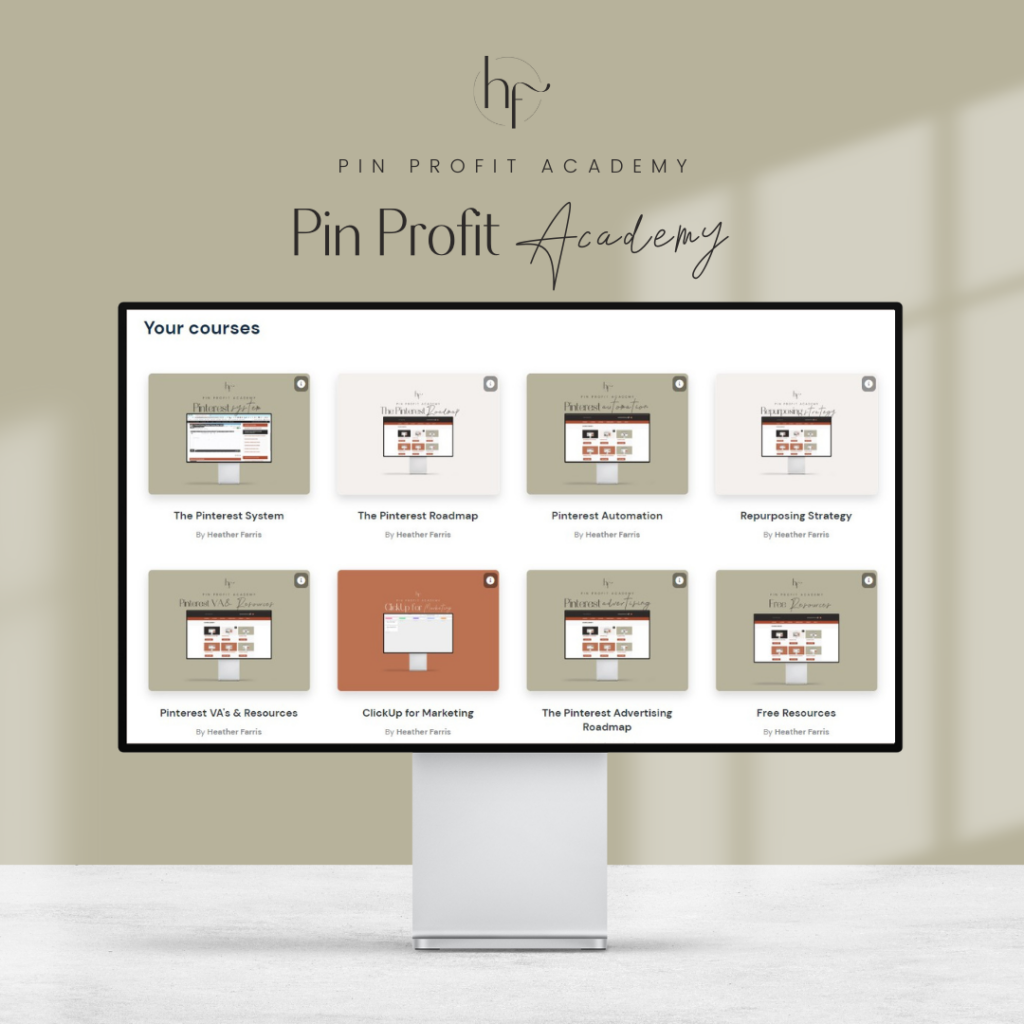
If you’re ready to turn this strategy into real results for your business, join Pin Profit Academy. Come get the full support, tools, and step‑by‑step guidance you need to build a Pinterest marketing system that drives consistent traffic and long-term sales.
Pin Profit Academy
Marketing can be difficult and trying to figure it out on your own, especially with Pinterest, can be overwhelming.
I will show you how to double your traffic and sales without spending another minute on social media!
PPA is the only comprehensive membership program & community for creating, marketing & selling your products & services using Pinterest.
Pin it for later

Heather Farris went to school for accounting and worked for years in banking and finance. After finding all of that entirely too boring she started her first blog in her basement in August of 2016. She has started 3 blogs in the marketing, motherhood and travel niches and used Pinterest to grow them all. She quickly became the go-to Pinterest strategist in her peer circles and has been implementing strategies, driving traffic and sales through organic and paid tactics for her clients. On this blog and her YouTube channel, as a renowned Pinterest marketing expert, she educates the public about clear and transparent marketing strategies to help them to grow on Pinterest and in other places online. She created Pin Profit Academy and helps small business owners just like you to master their Pinterest marketing strategy. Heather is now a Pinterest Educator, one of the very few sponsored by Pinterest.