

Pinterest Pin Title Strategies For Bloggers
Your existing content is already a gold mine for Pinterest without having to create any new content right now, but you’re probably not using it to its maximum potential. Because of how both Google and Pinterest can take your Pinterest pin title and use it to index into their search engines, there is massive potential to capitalize on this.
In today’s post, let’s talk about how to take your existing content on your website, or products you sell, and use it. Use it to break things down into additional topics, subtopics, or angles so you can continue to promote that content on Pinterest and grow your audience.
How your content has multiple topics
Now, when you make a piece of content on your website, or if you make a product, it usually doesn’t solve one singular problem, does it? Even inside of one blog post, there are multiple different topics or methods that you could pull out and make into individual Pinterest pins.
But a lot of people just completely skip over the idea of creating Pinterest pins for those subtopics, or those little ideas inside of the blog post that could be gems on their own. Your individual ideas within posts can make great Pinterest pin titles as well.
RELATED: How to Write Pin Titles on Pinterest That Make People Want to Click
Google vs Pinterest indexing for content
When Google reads your blog content and indexes it, it potentially logs it for hundreds of different keyword topics. Now, the only difference is on Pinterest, we actually have to give Pinterest the content to index.
Google just simply reads our blog posts and indexes them. But with Pinterest, we have to tell the platform what to index. This is more tedious, but it offers more control too in telling Pinterest exactly what you want to rank for, and you DO.
So, today I’m going to walk you through how to break this down and show you four different examples of how to apply these Pinterest pin title strategies in creating and optimizing your content.
RELATED: Pinterest SEO Strategies: Ultimate Guide to Boost Traffic
Blog topics for pin creation ideas
Okay, let’s start with this blog post of mine on my travel blog. What I did was write a blog about different art museums in Europe that I think people should visit. As I was putting this blog post together, I was creating it from the standpoint of:
- there are three museums that I visited
- here is why I think they’re great
- information about the art pieces within.
But how you’re going to approach this as we scroll through is you’re looking for the big topics that you can put into any piece of content like your Pinterest pin titles. In this instance here that we’re going to be looking at, I’m going to show you the Pinterest pins for this blog post.
RELATED: How to Optimize Your Blog Content for Pinterest Users
Generic topic text and image specific pins
Within this post I detail a few different museums, and also have imagery of just the artwork seen in those locations. I include museum names, city location, artwork titles, and things I like or dislike about each.
Because of this variety, I have text overlay pins, and also included the artwork images alone for people to pin from different audiences. This could attract travel enthusiasts looking for recommended places and new things to love. Others could be looking for exact classic artists and where to find their specific pieces of work.

Pinterest pin titles strategies for travel itineraries
In this blog post where we visited the city of Delft, I am basically breaking down the city as we explored. I wrote it like an itinerary format of what readers can do, places to visit, restaurants I recommended, coffee houses, historic locations, etc.
I list and locate those specific places, specifically with the intention of them becoming Pinterest pins, even with their different details.
- Generic travels in the city
- Cafes and coffee shops
- Unique architecture and views
- Canals and city streets
- Family activities to enjoy
- Highlighted historical locations


All of those things can be used for different Pinterest pin titles, topics and content across multiple pins and boards. Above and beyond just the blog title containing all of this information, my pins can highlight this single blog post from many different angles.
RELATED: 7 Ways to Generate Content Ideas Even When You’re Not Feeling Creative
Mining your content for searchable topics
As you are pulling these things together with your blog posts, what you’re going to do is go to Pinterest and search for those overarching thoughts from your blog. This is mining your content for things that people are actually looking for and how it shows up.
- What did you talk about in your blog post, no matter how minor the topic?
- What problems does your product or information solve?
Take all of those details and break them down into smaller ideas. These ideas can become a series of Pinterest pins for that content, even though they all point to the same URL.
RELATED: How Often Can You Pin the Same URL to Pinterest Without Being Spammy?
More lifestyle and family themed post topics
Even though my travel blog is often focused on locations and experiences from the perspective of an American family new to the country, I also have touched on family relationships and activities in locations. This opens to a new audience on Pinterest as well.
Now we have a lot more ideas that can be used for Pinterest pin title strategies and content like:
- Family summer activities in the alps
- Family activities in certain cities
- What to do that’s great with kids
- Where to eat that everyone will enjoy, not just adults
I even have Pinterest pins for Bronnwald talking about a fairy tale village we explored because that is something specific that people are looking for. We spent four days in this area and I used a ton of the things we did as specific pins.

Example capsule wardrobe blog post
I have another example for you that is completely outside of the realm of my expertise, but I think it’s a great example. It is about how to build a capsule wardrobe and ditch fast fashion. In this blog post, this creator really breaks down all of the nitty-gritty of actually doing this well.
In this instance, if I were the creator, I would have a series of content and make a Pinterest pin title for each that addresses the following:
- The overarching topic of how to build a capsule wardrobe
- The individual steps of creating that wardrobe
- Pins addressing shopping sustainably
- How to create bigger impact with fewer pieces
- Instagram trends vs timeless style
- Budgeting and pricing considerations
- Investing in a wardrobe strategically
- Beginner friendly tips for anyone just starting to build a new wardrobe
- Going through a closet cleanout
- Picking color palettes of clothes
- Daily uniform pieces based on your works needs or roles you fill
- How to prioritize versatility with your clothes
- Working with sentimental favorite pieces in your wardrobe
- Where to shop or how to choose what stores to shop at
- Keeping high quality inside of your budget
There are so many things discussed within this blog post that each of those individual subtopics and tips can become their own piece of content on Pinterest. Even multiple pins of the same tip, just using a different image and Pinterest pin title.

I would also recommend that this creator make a greater variety of pinnable images that a reader can pin easily. I see just a single one with text overlay. A few vertical pins with specific pieces are good for shopping content. But a lot more pins on the list above could maximize the content and traffic options leading to this blog post.
RELATED: How to Create Pins for Pinterest in Canva: An Image Workflow to Save Time
Pinterest for Teachers blog post example
Okay, I have one final example and this is something that I created for teachers on how to grow their teaching businesses. With this post, I have and would continue to use almost all of the headings and subsections as their own Pinterest pin title, some tweaked a bit, of course.
- Pinterest for Teachers: How to grow your teaching business on Pinterest
- Key Things for Teachers Using Pinterest
- Goals Every Teachers Marketing with Pinterest Should Have
- Overcoming the Challenges Teachers Have Selling on Pinterest
- Tips for Teachers Using Pinterest
- Using Pinterest Trends and Seasonality as a Teacher
Then I would go down into each of the steps I outline for their personalized Pinterest marketing plan, using each of these for a Pinterest pin title and/or text overlay as well:
- Pinterest for Teachers: How to develop your keyword plan for SEO
- Pinterest Board Strategy for Teachers
- The Right Teaching Content to Promote on Pinterest
- Creative Pin Strategy for Teachers on Pinterest
- Video or Content Pin Templates for Pinterest Teachers
- Scheduling Your Teacher Content Pins Strategically
- Pinterest Analytics to Watch as a Teacher
See how many more pin options are possible for one single blog post? Then with each of those bullets, multiple pins could be created with variations of the same Pinterest pin title just rephrased or adjusted slightly.
RELATED: Organic Pinterest Marketing for Teachers Pay Teachers
How many Pinterest pins do I have to make?
Now, let’s pause for a second because it’s a common question to ask, “How many pins do I make for each subtopic or tip?” I would just start with however many you have imagery for. If it’s a blog post that already naturally has lots of images, then you can naturally use them.
If you have to create your own imagery or find stock photos, that’s fine. For instance, when I was in Switzerland, I took lots of landscape shots, but I don’t have very many photos of what we eat. So I prioritized my pins toward what I could create with my personal photos first, rather than digging for other stock photos to start.
But as you spread out the variety to hit more keywords Pinterest can index your content more fully across multiple audiences. Perhaps a single viewer is searching for many different topics you already cover, but they’re not aware you have the content for them… until they see you do.
RELATED: What are the Different Types of Pins on Pinterest? (+ When to Use Each)
Keyword research for Pinterest pin titles
Now that we’ve covered the basics of where to get your source content for your pins, now the next step is to do the keyword research for each of those topics. You’re just going to come to Pinterest and use the search bar or the trends tool. Use the filters and try out variations to find your optimized versions of all the keywords for each Pinterest pin title.

Each of those keywords you find can then become a Pinterest pin that points to your blog post. As long as you have content in there that fits. Don’t use keywords you find that don’t actually fit, because that goes against the relevance of your content and Pinterest doesn’t like that.
RELATED: What is Pinterest Relevancy & How the Pinterest Algorithm Works
Pin content and keyword tracking worksheet
If you’d like a worksheet to help you with this, there is one right inside of my free resource library. If you go to heatherfarris.com/resources and create a free account, you’ll find a worksheet to help you with all of this: Repurpose Your Blog Posts Into Endless Pinterest Pins.

Final thoughts on Pinterest pin title strategies for bloggers
Now that you can see that you can take your one piece of content and turn it into like 30 pieces of content on Pinterest, you’ll never be short of pin ideas nor have an empty queue. I want to challenge you to do this so you no longer have to wonder what to pin about, and use my free worksheet to keep track of it all.
Not only do you probably have tons of URLs in your business that you can create pins for, but each individual URL is a gold mine of ideas. I hope these Pinterest pin title strategies have inspired you for your entire next year of pin creation. If you’d like more support and personal access to me for every step of your Pinterest marketing strategy, join our Pin Profit Academy. The comprehensive membership program & community for creating, marketing & selling your products & services using Pinterest, so you can stop relying on social media.
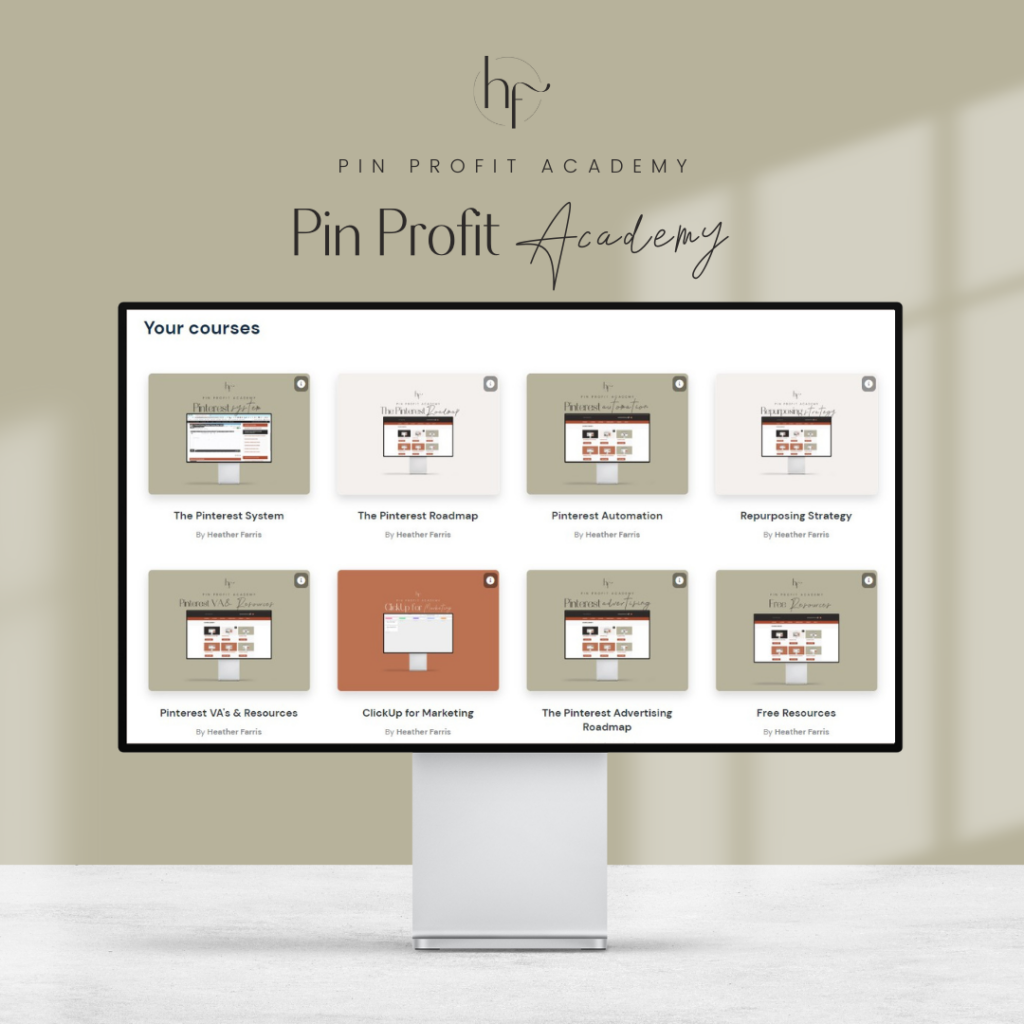
Pin Profit Academy
Marketing can be difficult and trying to figure it out on your own, especially with Pinterest, can be overwhelming.
I will show you how to double your traffic and sales without spending another minute on social media!
PPA is the only comprehensive membership program & community for creating, marketing & selling your products & services using Pinterest.
Pin it for later


Heather Farris went to school for accounting and worked for years in banking and finance. After finding all of that entirely too boring she started her first blog in her basement in August of 2016. She has started 3 blogs in the marketing, motherhood and travel niches and used Pinterest to grow them all. She quickly became the go-to Pinterest strategist in her peer circles and has been implementing strategies, driving traffic and sales through organic and paid tactics for her clients. On this blog and her YouTube channel, as a renowned Pinterest marketing expert, she educates the public about clear and transparent marketing strategies to help them to grow on Pinterest and in other places online. She created Pin Profit Academy and helps small business owners just like you to master their Pinterest marketing strategy. Heather is now a Pinterest Educator, one of the very few sponsored by Pinterest.