

Why Your Pinterest Traffic Is Dropping + What To Check First
Has your Pinterest traffic taken a hit lately? Don’t panic. Today’s post is going to walk you through what to look for, so you can figure out exactly why your Pinterest traffic is dropping, and what to do about it. We’re skipping the fluff and diving straight into the single most important tactic about Pinterest traffic and analytics that you need to know.
Why your Pinterest traffic can dip
Before we dive into the back end of my Pinterest account I’m going to show you, I just wanted to set the stage just a little bit. Pinterest traffic can dip for lots of reasons.
- Seasonal changes
- Audience fatigue
- Content algorithm changes
- Inconsistent pinning
The biggest mistake that I see people making is assuming that their content isn’t working or Pinterest is broken. When in reality, there’s a lot of nuance between what is actually going on, your content, your business, and your audience. We’re going to explore that.
RELATED: Pinterest Analytics: A Simple Guide to Read & Analyze Your Data
Ranges and patterns with Pinterest traffic dropping
To get started, you want to navigate to your Pinterest analytics and set your date range to whatever it is before the drop in traffic, and then after the drop. Let’s say the drop was happening in the last 90 days. I’m going to use an example from my own analytics. My traffic drop looks something like this.

So, let’s say your numbers were really high in April and then it really drops off and it’s pretty low. Then maybe you start to recover and you’re seeing that recovery happening months later. If this is what you’re seeing, then don’t fret because this could be related to audience behavior and less of like what you’re doing wrong. We won’t know exactly until we dig into the data.
RELATED: Pinterest Analytics: What to Do With Your Pinterest Data
Identify keywords from top pins and boards
Navigate down to the top pin section and start looking at your top pins and seeing what keywords you used in those titles to rank. Write down those keywords.

Then go to your top boards and do the same thing. Consider what are your boards and what are those topics? How can we correlate these to keywords? Now, your board title should be a keyword already. Write those down.
RELATED: How to Use Keywords to Optimize Your Pins on Pinterest
What matters from your audience insights
Now go over to your ‘Audience Insights’. Under your ‘Total Audience’, scroll down and take note of the age and gender of your audience, because this is going to be important. We’re going to relate this to the current trends in a second.
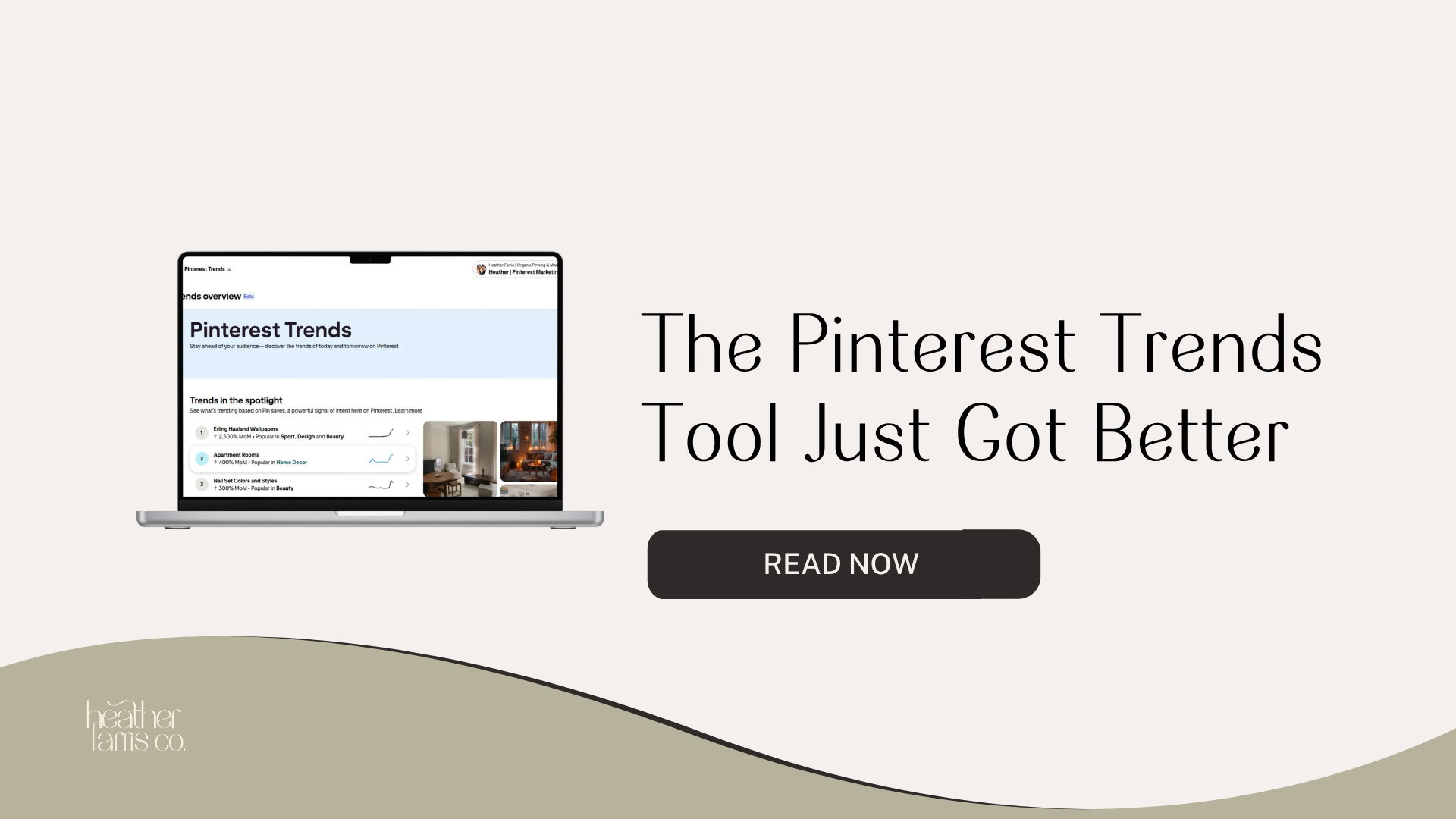
Then open Pinterest Trends and I want you to come down into the trends report to the ‘Discover trends…’ table. Next, start plugging in your keywords that were in the top pins and the top boards report you wrote down. Put those individually into the keywords section of the table to see what trends are happening around your keywords.

Cross reference in Pinterest trends
Let’s say for example, I blog about bread and ‘sourdough rolls’ is one of the topics that has been in my top trending report for the last 90 days. I can open that up and see the last 90 days of trending data for this keyword. As I’m writing this post, this data is from the end of 2024 into 2025. So we can see a sharp increase and drop off.

Then scroll down and see the demographics of the time range with your keyword trend you’ve searched. Note the age ranges and gender distribution. Because we’re going to use this to compare to your own personal content.

Match the data declines and demographics
Now you’re going to compare the trending keyword data to your own personal trends data you’re seeing. You want to match the one decline to the trending decline. If you can match your top keywords keywords in the trends tool, as well as the distribution of the audience, that is a natural declining trend of your content.
If you see the correlation, you can start adding in keywords that may boost your current declining content to help. More on that in a moment.
RELATED: Pinterest Trends: How to Use This Keyword Tool for Content Planning
Filters and view options in trending Pinterest traffic
Within the Pinterest Trends tool, I always default to the ‘Top Yearly’ filter personally because I want to see over the year what these are doing. I find most trends are easiest to see with this time span.

If you wanted to add a bunch of keywords in here to get more relevant results to come up in the table, you can also do that. Just make sure that you’re matching them from your board topic keywords and your pin titles.
RELATED: How to Increase Pinterest Pin Clicks With a Strong Keyword Strategy
Other reasons your Pinterest traffic is dropping
Now that we’ve covered the most important tactic in figuring out what is going on with your Pinterest traffic dipping, I want to go through another list of potential reasons why your traffic could be dropping off on Pinterest.
Now all of these I’m about to show you are realworld examples of things that I have actually seen people doing within their Pinterest strategy. We’re going to cover each of these in more detail.
- Not shifting your content strategy before trends peak
- Not varying keywords or consistently pinning
- No new pin designs over time
- Constant repurposing from other platforms
- Overuse of AI content creation
- Not diversifying content apart from microtrends
- Ignoring long term algorithm changes
RELATED: Pinterest Best Practices to Get More Traffic & Sales
Shift your strategy before trends peak
When trends peak is not when to start pinning. If you’re not shifting your content strategy early enough so that you ride that roller coaster to the very top before it starts to go down, you’re going to miss the wave. As soon as it starts to go down, your Pinterest traffic is dropping with it because you have not started capitalizing on other trends ahead of that rise. This is not something that is one and done.
When you focus on Pinterest trends and you’re good to go, then you’re always moving on to the next one. You need to be constantly injecting new Pinterest trends and keyword opportunities into your strategy before they get to the peak. This is especially important for holiday sales or seasonal promotions applicable to your content.
RELATED: Pinterest Holiday Marketing Strategy That Works Year After Year
Expand keyword variations and pinning consistency
Another issue is lack of keyword variation. If you’re just going after one keyword for every single blog post or product that you publish, that’s a problem. That is not how SEO works. There are so many different ways that people are actually looking for your content and products on Pinterest. Let’s do a deeper and a wider search net to see what people might be searching for.
Then not posting frequently or consistently enough is a problem if your Pinterest traffic is dropping. If you go from pinning five times a day to pinning one time a day or nothing for a month at a time, you’re going to see a backslide in engagement. That’s just a natural thing that is going to happen.
RELATED: Pinterest SEO Strategies: Ultimate Guide to Boost Traffic
Have fresh pin designs over time
Not adding in new pin designs every now and then could lead to brand fatigue and people going blind to your content. You definitely don’t want that to happen. But you don’t want to be changing your pin designs so often that no one really recognizes you as a brand on Pinterest.
Shifting your pin designs every once in a while, plus having a variety of dedicated options keeps things recognizable and also new. Your dedicated audience members will always recognize your branding, but then also stay tuned in with new designs periodically.
RELATED: How to Create Branded Pinterest Designs to Boost Sales
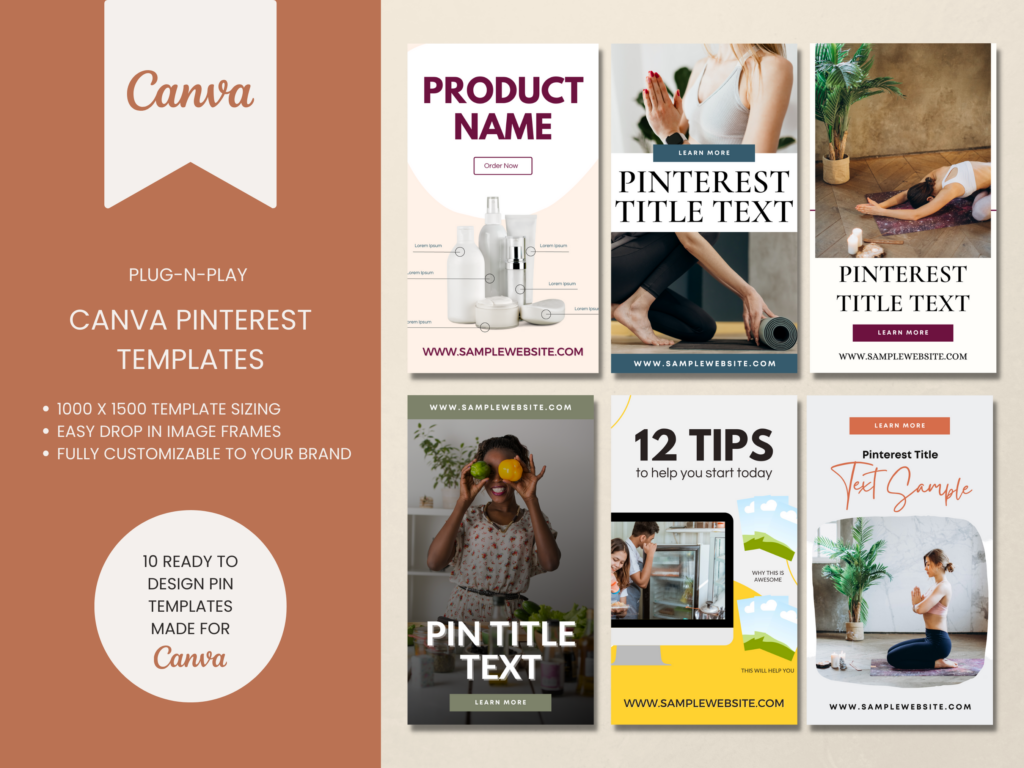
Video or Content Pinterest Templates
If you want traffic don’t rely on something just whipped up! Speed up your pin creation by using templates to get more pins out faster and more often.
These Pinterest templates are great for video content or blog posts & are ready to go. You can start creating pins on Pinterest in minutes.
Beware of over-repurposing from other platforms
Too much repurposed content from third party platforms without a Pinterest marketing strategy behind them can obviously lead to a lack of engagement that you wish to see. If you are bringing content over from other platforms like Instagram, Tik Tok, or YouTube shorts, etc., make sure that you are optimizing them for a Pinterest specific audience.
That includes your pin titles, descriptions, and changing the link to be the destination of your website or shop and not necessarily back to those platforms. It’s not just copy and paste, so make sure you’re still reviewing what you repurpose.
RELATED: How to Optimize Your Instagram Content for Pinterest
AI content filters and competing with AI
If you’re creating content with AI, you could be getting filtered out of where people are not wanting to see AI content. If that’s what you intend to continue doing by creating with AI, stay aware of that big possibility that may affect you.
Or you may be getting smothered by AI generated content within your same niche. If that’s the case, there’s really nothing that you can do other than continuing to publish human first content that stands out authentically. Making sure that your pins look real and click-worthy, not just the wonky repetitive AI content that’s rolling out.
RELATED: Pinterest AI Settings to Update Immediately
Diversified content when micro trends shift
We can see audience behavior shifting unpredictably too. I’ve seen this happen a number of times where something will be really popular for a long time, then it just suddenly fades away. We are living in the world of micro trends that come and go as quickly as fashion, honestly. So I want you to make sure that you are keeping abreast of that especially if you are in the micro trend content space.
If you are noticing that your audience demographics are changing or your audience behavior is moving away from those topics, then you may want to look into diversifying your content strategy. There are evergreen topics that will always be around, make sure to have those and not solely trending things.
RELATED: Pinterest Mistakes Holding You Back From Success
Algorithm changes and long-term strategy for Pinterest traffic
The last point of why your Pinterest traffic is dropping is simply algorithm changes. This is not something that we can control. It’s not something that I have inside information on even as a Pinterest Educator. I just know that they do release algorithm updates.
The best thing that you can do for longevity on Pinterest is a keyword strategy for both your pins and your boards to make sure that you are meeting your audience where they are at. By continuously staying on top of your keyword research, trends monitoring, and utilizing a proven Pinterest marketing strategy, you will adjust to any algorithm changes naturally.
But if you’re inside of the Pin Profit Academy, all of that is provided for you to implement. Plus, I announce updates and big news for Pinterest to my community there first because I work directly with them with personal Q&A. Come check it out and take your small business marketing to the next level.
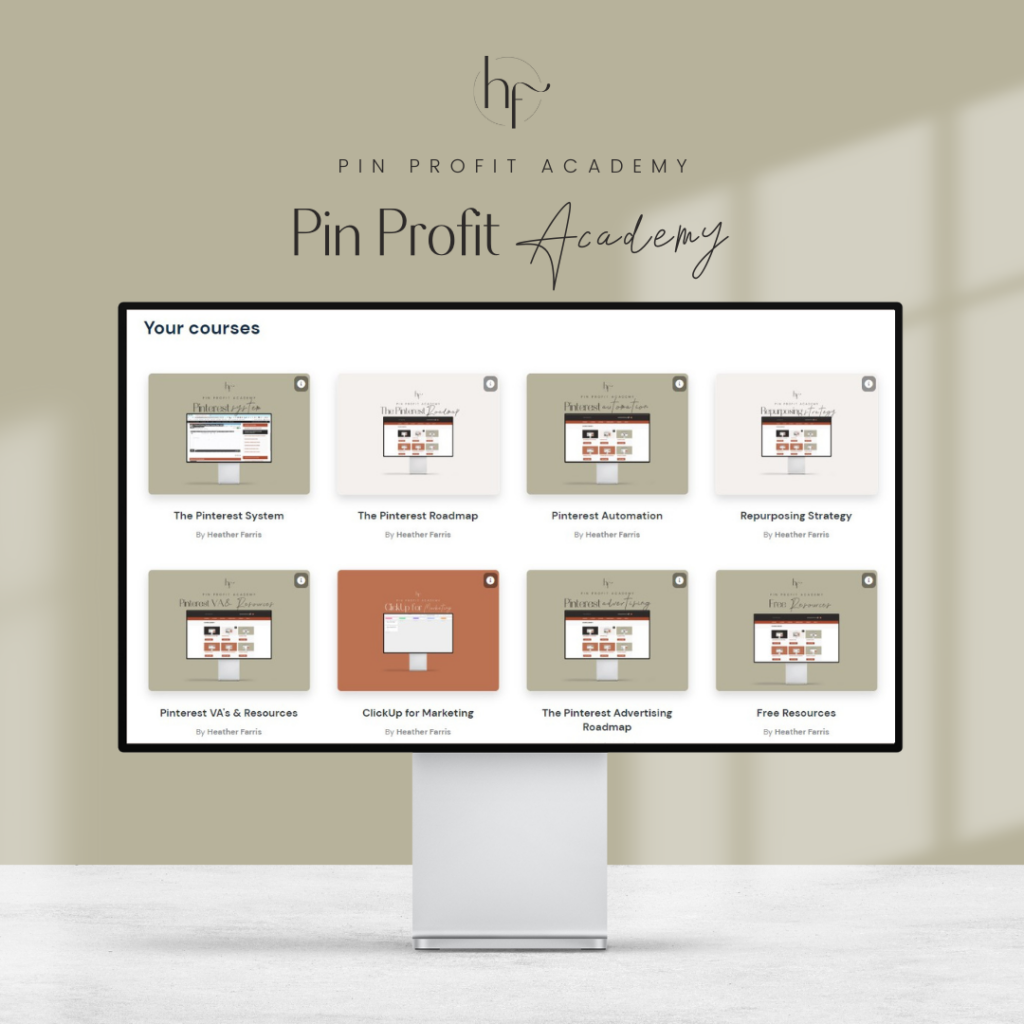
Pin Profit Academy
Marketing can be difficult and trying to figure it out on your own, especially with Pinterest, can be overwhelming.
I will show you how to double your traffic and sales without spending another minute on social media!
PPA is the only comprehensive membership program & community for creating, marketing & selling your products & services using Pinterest.
Final thoughts on why your Pinterest traffic is dropping
So the next time that your Pinterest traffic is dropping, don’t panic. Research, dive into your analytics. Let’s analyze what we have going on. Let’s make decisions and get to conclusions based on the data that Pinterest gives us, not just trying a new random method that’s shooting in the dark.
This isn’t always easy. Yes, it can be time consuming, but it is worth it to understand exactly what your content is doing and how it’s resonating with your audience on Pinterest. Then even when you track and monitor the changes in your traffic, you can anticipate the trends better and still see growth because you’re riding the waves like a pro.
Pin it for later


Heather Farris went to school for accounting and worked for years in banking and finance. After finding all of that entirely too boring she started her first blog in her basement in August of 2016. She has started 3 blogs in the marketing, motherhood and travel niches and used Pinterest to grow them all. She quickly became the go-to Pinterest strategist in her peer circles and has been implementing strategies, driving traffic and sales through organic and paid tactics for her clients. On this blog and her YouTube channel, as a renowned Pinterest marketing expert, she educates the public about clear and transparent marketing strategies to help them to grow on Pinterest and in other places online. She created Pin Profit Academy and helps small business owners just like you to master their Pinterest marketing strategy. Heather is now a Pinterest Educator, one of the very few sponsored by Pinterest.